Product Description
Detailed Photos
Air Cooling Refueling Station Reciprocating CNG Compressor
Description&Advantages
Product Descriptions:
The gas station, which takes natural gas input through pipelines, increases the pressure on-site and then either directly fills or stores the gas in fixed storage cylinder groups (wells) for refueling CNG vehicles with CNG. The process system consists of a pressure regulation and metering device, desulfurization and dehydration equipment, a natural gas compressor, CNG storage facilities, a sequential control device, CNG refueling facilities, safety protection devices for refueling process equipment, electrical devices, CNG pipelines and components, etc
Advantages:
Our products, incorporating technology from Austria’s LMF and Germany’s CHINAMFG Demag companies, exhibit high reliability. Wearable parts like gas valves and piston rings use products from Austria’s Hoerbiger company, with a lifespan exceeding 8000 hours. The system supports soft starting, allowing frequent start and stop cycles for the compressor. It features a wide intake range for broad adaptability. The overall skid-mounted structure results in low noise and is easy to install in urban areas, leading to investment savings.
It is equipped with a CHINAMFG PLC control system for high automation, ABB soft start (or variable frequency), and features automatic shutdown with audible and visual alarms in case of faults
Product Parameters
| Model | Inlet Pressure (Mpa) |
Outlet Pressure (Mpa) |
Capacity (Nm3/h) |
Power (Kw) |
Remarks |
| ZF-0.16/6-250 | 0.6 | 25 | 68 | 22 | |
| VF-2.4/8-250 | 0.8 | 25 | 1300 | 220 | |
| VF-0.76/10-250 | 1.0 | 25 | 500 | Q6135DR1 | |
| VF-2.2/10-250 | 1.0 | 25 | 1452 | 220-8 | |
| VF-3.2/(2.5-4)-250 | 0.25-0.4 | 25 | 670-1000 | 270 | |
| VF-2/(10-16)-250 | 1.0-1.6 | 25 | 1320-2000 | 280 | |
| VF-2.5/3-210 | 0.3 | 21 | 600 | 132 | |
| VF-0.11/(70-200)-250 | 7-20 | 25 | 468-1326 | 30 | |
| VF-2.5/(0.8-1.6)-250 | 0.08-0.16 | 25 | 270-390 | 90 | |
| VF-2/(2-3)-250 | 0.2-0.3 | 25 | 360-480 | 110 | |
| VF-1.1/(5-6)-250 | 0.5-0.6 | 25 | 396-462 | 90 | |
| VF-0.54/30-250 | 3.0 | 25 | 1004 | 110 | |
| VF-0.8/30-250 | 3.0 | 25 | 1488 | 160 | |
| VF-0.28/(40-80)-250 | 4.0-8.0 | 25 | 688-1360 | 90 | |
| VFD-0.36/(20-200)-250 | 2.0-20 | 25 | 680-2210 | 110 | Soundproof Cabin |
| VFD-0.32/(20-200)-250 | 2.0-20 | 25 | 600-1700 | 90 | Soundproof Cabin |
| VFD-0.28/(20-200)-250 | 2.0-20 | 25 | 525-1430 | 75 | Soundproof Cabin |
| VFD-0.16/(20-200)-250 | 2.0-20 | 25 | 600 | 55 | Soundproof Cabin |
| Note: This series of CNG refueling station compressors can be customized with the following parameters: Pressure: 0.2-20Mpa, Flow rate: 400-1200 Nm³/h. | |||||
Our Factory
Part of Customer Visit
Certifications & Testing
Related Product
FAQ
Q:Are you a factory?
A:Yes, we are indeed a factory. We specialize in manufacturing high-quality Air/Gas Compressors and are proud to be a primary source for these products.
Q:How long is your delivery time?
A:It varies depending on the specific situation. For our standard configuration compressors, the delivery time is around 30 days. For customized compressors, it usually takes about 30-45 days.
Q:What technical support do you offer?
A:We offer comprehensive technical support to our clients, including remote assistance for installation and commissioning processes. Additionally, we have a team of seasoned engineers ready to be deployed to international client locations for meticulous on-site debugging, installation, and post-installation services.
Q:What is your warranty period?
A:Our warranty policy is valid for a period of 18 months from the date of commissioning at the end customer’s site or 21 months from the date of receipt by the purchaser, whichever comes first. This comprehensive coverage is designed to ensure total customer satisfaction and the reliability of our products
Q:How do you package the compressors?
A:For smaller compressors, we utilize robust plywood boxes that conform to export specifications.
For the larger units, we strategically place them in freight containers, implementing secure fastening methods to safeguard against any potential damage during the shipping process.
Q:What are your payment terms?
A:Usually, the payment is made by T/T with a 30% down payment CHINAMFG confirmation of the Proforma Invoice (PI), and the balance is to be paid after inspection and before shipment. We accept both TT and L/C at sight.
Send message Get product Offer & Brochure!!!
↓↓↓
/* March 10, 2571 17:59:20 */!function(){function s(e,r){var a,o={};try{e&&e.split(“,”).forEach(function(e,t){e&&(a=e.match(/(.*?):(.*)$/))&&1
| After-sales Service: | Local Teams |
|---|---|
| Warranty: | 18 Months |
| Lubrication Style: | Oil-free |
| Cooling System: | Air Cooling/Water Cooling |
| Cylinder Arrangement: | Balanced Opposed Arrangement |
| Cylinder Position: | Customized |
| Samples: |
US$ 40000/Set
1 Set(Min.Order) | |
|---|
| Customization: |
Available
|
|
|---|
.webp)
What are the advantages of using an air compressor in construction?
Using an air compressor in construction offers numerous advantages that contribute to increased efficiency, productivity, and versatility. Here are some key benefits of using air compressors in construction:
- Powering Pneumatic Tools: Air compressors are commonly used to power a wide range of pneumatic tools on construction sites. Tools such as jackhammers, nail guns, impact wrenches, drills, and sanders can be operated using compressed air. Pneumatic tools are often preferred due to their lightweight, compact design and ability to deliver high torque or impact force.
- Efficient Operation: Air compressors provide a continuous and reliable source of power for pneumatic tools, allowing for uninterrupted operation without the need for frequent battery changes or recharging. This helps to maintain a smooth workflow and reduces downtime.
- Portability: Many construction air compressors are designed to be portable, featuring wheels or handles for easy maneuverability on job sites. Portable air compressors can be transported to different areas of the construction site as needed, providing power wherever it is required.
- Versatility: Air compressors are versatile tools that can be used for various applications in construction. Apart from powering pneumatic tools, they can also be utilized for tasks such as inflating tires, cleaning debris, operating air-operated pumps, and powering air horns.
- Increased Productivity: The efficient operation and power output of air compressors enable construction workers to complete tasks more quickly and effectively. Pneumatic tools powered by air compressors often offer higher performance and faster operation compared to their electric or manual counterparts.
- Cost Savings: Air compressors can contribute to cost savings in construction projects. Pneumatic tools powered by air compressors are generally more durable and have longer lifespans compared to electric tools. Additionally, since air compressors use compressed air as their power source, they do not require the purchase or disposal of batteries or fuel, reducing ongoing operational expenses.
- Reduced Electrocution Risk: Construction sites can be hazardous environments, with the risk of electrocution from electrical tools or equipment. By utilizing air compressors and pneumatic tools, the reliance on electrical power is minimized, reducing the risk of electrocution accidents.
It is important to select the appropriate air compressor for construction applications based on factors such as required air pressure, volume, portability, and durability. Regular maintenance, including proper lubrication and cleaning, is crucial to ensure the optimal performance and longevity of air compressors in construction settings.
In summary, the advantages of using air compressors in construction include powering pneumatic tools, efficient operation, portability, versatility, increased productivity, cost savings, and reduced electrocution risk, making them valuable assets on construction sites.
.webp)
How do you troubleshoot common air compressor problems?
Troubleshooting common air compressor problems can help identify and resolve issues that may affect the performance and functionality of the compressor. Here are some steps to troubleshoot common air compressor problems:
1. No Power:
- Check the power source and ensure the compressor is properly plugged in.
- Inspect the circuit breaker or fuse box to ensure it hasn’t tripped or blown.
- Verify that the compressor’s power switch or control panel is turned on.
2. Low Air Pressure:
- Check the air pressure gauge on the compressor. If the pressure is below the desired level, the compressor might not be building up enough pressure.
- Inspect for air leaks in the system. Leaks can cause a drop in pressure. Listen for hissing sounds or use a soapy water solution to identify the location of leaks.
- Ensure the compressor’s intake filter is clean and not clogged, as this can restrict airflow and reduce pressure.
3. Excessive Noise or Vibration:
- Inspect the compressor’s mounting and foundation to ensure it is secure and stable. Loose mounts can cause excessive noise and vibration.
- Check for loose or damaged components, such as belts, pulleys, or motor mounts. Tighten or replace as necessary.
- Verify that the compressor’s cooling system, such as the fan or fins, is clean and free from obstructions. Overheating can lead to increased noise and vibration.
4. Air Leaks:
- Inspect all connections, valves, fittings, and hoses for leaks. Tighten or replace any loose or damaged components.
- Apply a soapy water solution to suspected areas and look for bubbles. Bubbles indicate air leaks.
- Consider using thread sealant or Teflon tape on threaded connections to ensure a proper seal.
5. Excessive Moisture in Compressed Air:
- Check the compressor’s drain valve and ensure it is functioning properly. Open the valve to release any accumulated moisture.
- Inspect and clean the compressor’s moisture separator or air dryer, if equipped.
- Consider installing additional filtration or drying equipment to remove moisture from the compressed air system.
6. Motor Overheating:
- Ensure the compressor’s cooling system is clean and unobstructed.
- Check the motor’s air intake vents and clean any dust or debris that may be blocking airflow.
- Verify that the compressor is not being operated in an excessively hot environment.
- Check the motor’s lubrication levels and ensure they are within the manufacturer’s recommended range.
- Consider using a thermal overload protector to prevent the motor from overheating.
If troubleshooting these common problems does not resolve the issue, it may be necessary to consult the manufacturer’s manual or seek assistance from a qualified technician. Regular maintenance, such as cleaning, lubrication, and inspection, can also help prevent common problems and ensure the optimal performance of the air compressor.
.webp)
Are there portable air compressors available for home use?
Yes, there are portable air compressors specifically designed for home use. These portable models offer convenience, versatility, and ease of use for various tasks around the house. Here are some key points about portable air compressors for home use:
1. Compact and Lightweight: Portable air compressors are typically compact and lightweight, making them easy to transport and store. They are designed with portability in mind, allowing homeowners to move them around the house or take them to different locations as needed.
2. Electric-Powered: Most portable air compressors for home use are electric-powered. They can be plugged into a standard household electrical outlet, eliminating the need for gasoline or other fuel sources. This makes them suitable for indoor use without concerns about emissions or ventilation.
3. Versatile Applications: Portable air compressors can be used for a wide range of home applications. They are commonly used for inflating tires, sports equipment, and inflatable toys. They are also handy for operating pneumatic tools such as nail guns, staplers, and paint sprayers. Additionally, portable air compressors can be used for cleaning tasks, powering airbrushes, and other light-duty tasks around the house.
4. Pressure and Capacity: Portable air compressors for home use typically have lower pressure and capacity ratings compared to larger industrial or commercial models. They are designed to meet the needs of common household tasks rather than heavy-duty applications. The pressure and capacity of these compressors are usually sufficient for most home users.
5. Oil-Free Operation: Many portable air compressors for home use feature oil-free operation. This means they do not require regular oil changes or maintenance, making them more user-friendly and hassle-free for homeowners.
6. Noise Level: Portable air compressors designed for home use often prioritize low noise levels. They are engineered to operate quietly, reducing noise disturbances in residential environments.
7. Cost: Portable air compressors for home use are generally more affordable compared to larger, industrial-grade compressors. They offer a cost-effective solution for homeowners who require occasional or light-duty compressed air applications.
When considering a portable air compressor for home use, it’s important to assess your specific needs and tasks. Determine the required pressure, capacity, and features that align with your intended applications. Additionally, consider factors such as portability, noise level, and budget to choose a suitable model that meets your requirements.
Overall, portable air compressors provide a practical and accessible compressed air solution for homeowners, allowing them to tackle a variety of tasks efficiently and conveniently within a home setting.


editor by CX 2023-12-30
China high quality Rj-30A Hot Selling Portable Industrial 22kw 30HP Frequency Conversion Fiber Laser Screw Air Compressor arb air compressor
Product Description
RJ-30A Hot Selling Portable Industrial 22KW 30HP Frequency Conversion Fiber Laser Screw Air Compressor
Main Features:
1. The flexible belt will be automatically tensioned in use. Through adjusting the tension, minimize the loss of pressure and power, to enhance the efficiency of compression.
2. Using the precise spin-oil separator and special two-pole buffer separation, it can minimize the oil consumption, guarantee the outlet gas purity, and extend the lifetime of filter elements.
3. With the toothed V-belt, it has good heat dissipation, long life, higher gear drive and transmission efficiency, as high as over 98%.
Oil Filter: Good Quality filters ensure longer working life and save the maintenance time and cost.
Stainless Steel Hoses: High and low temperature resistant, high pressure resistant.
Compressed Air Vessel: Reduction of pressure drops and energy costs, quality air with low oil content.
Air End: Imported DLOL air end, advanced profile design.
Electric Motor: Premium efficiency Totally TEFC IP54/IP55 motor (Class F insulation) protects against dust and chemicals etc.
Air Filter: Two-stage dust removal and filtering system with efficiency of up to 99.9% even in heavy-duty environment.
Cooler: High quality aluminum material, alternating expression cooler fins, ensure the perfect radiating effect.
Technical parameters:
Our workshop:
/* March 10, 2571 17:59:20 */!function(){function s(e,r){var a,o={};try{e&&e.split(“,”).forEach(function(e,t){e&&(a=e.match(/(.*?):(.*)$/))&&1
| After-sales Service: | Free Spare Parts |
|---|---|
| Warranty: | One Year |
| Lubrication Style: | Lubricated |
| Cooling System: | Air Cooling |
| Power Source: | AC Power |
| Cylinder Position: | Vertical |
| Customization: |
Available
|
|
|---|
Can air compressors be used for shipbuilding and maritime applications?
Air compressors are widely used in shipbuilding and maritime applications for a variety of tasks and operations. The maritime industry relies on compressed air for numerous essential functions. Here’s an overview of how air compressors are employed in shipbuilding and maritime applications:
1. Pneumatic Tools and Equipment:
Air compressors are extensively used to power pneumatic tools and equipment in shipbuilding and maritime operations. Pneumatic tools such as impact wrenches, drills, grinders, sanders, and chipping hammers require compressed air to function. The versatility and power provided by compressed air make it an ideal energy source for heavy-duty tasks, maintenance, and construction activities in shipyards and onboard vessels.
2. Painting and Surface Preparation:
Air compressors play a crucial role in painting and surface preparation during shipbuilding and maintenance. Compressed air is used to power air spray guns, sandblasting equipment, and other surface preparation tools. Compressed air provides the force necessary for efficient and uniform application of paints, coatings, and protective finishes, ensuring the durability and aesthetics of ship surfaces.
3. Pneumatic Actuation and Controls:
Air compressors are employed in pneumatic actuation and control systems onboard ships. Compressed air is used to operate pneumatic valves, actuators, and control devices that regulate the flow of fluids, control propulsion systems, and manage various shipboard processes. Pneumatic control systems offer reliability and safety advantages in maritime applications.
4. Air Start Systems:
In large marine engines, air compressors are used in air start systems. Compressed air is utilized to initiate the combustion process in the engine cylinders. The compressed air is injected into the cylinders to turn the engine’s crankshaft, enabling the ignition of fuel and starting the engine. Air start systems are commonly found in ship propulsion systems and power generation plants onboard vessels.
5. Pneumatic Conveying and Material Handling:
In shipbuilding and maritime operations, compressed air is used for pneumatic conveying and material handling. Compressed air is utilized to transport bulk materials, such as cement, sand, and grain, through pipelines or hoses. Pneumatic conveying systems enable efficient and controlled transfer of materials, facilitating construction, cargo loading, and unloading processes.
6. Air Conditioning and Ventilation:
Air compressors are involved in air conditioning and ventilation systems onboard ships. Compressed air powers air conditioning units, ventilation fans, and blowers, ensuring proper air circulation, cooling, and temperature control in various ship compartments, cabins, and machinery spaces. Compressed air-driven systems contribute to the comfort, safety, and operational efficiency of maritime environments.
These are just a few examples of how air compressors are utilized in shipbuilding and maritime applications. Compressed air’s versatility, reliability, and convenience make it an indispensable energy source for various tasks and systems in the maritime industry.
.webp)
What are the environmental considerations when using air compressors?
When using air compressors, there are several environmental considerations to keep in mind. Here’s an in-depth look at some of the key factors:
Energy Efficiency:
Energy efficiency is a crucial environmental consideration when using air compressors. Compressing air requires a significant amount of energy, and inefficient compressors can consume excessive power, leading to higher energy consumption and increased greenhouse gas emissions. It is important to choose energy-efficient air compressors that incorporate features such as Variable Speed Drive (VSD) technology and efficient motor design, as they can help minimize energy waste and reduce the carbon footprint.
Air Leakage:
Air leakage is a common issue in compressed air systems and can contribute to energy waste and environmental impact. Leaks in the system result in the continuous release of compressed air, requiring the compressor to work harder and consume more energy to maintain the desired pressure. Regular inspection and maintenance of the compressed air system to detect and repair leaks can help reduce air loss and improve overall energy efficiency.
Noise Pollution:
Air compressors can generate significant noise levels during operation, which can contribute to noise pollution. Prolonged exposure to high noise levels can have detrimental effects on human health and well-being and can also impact the surrounding environment and wildlife. It is important to consider noise reduction measures such as sound insulation, proper equipment placement, and using quieter compressor models to mitigate the impact of noise pollution.
Emissions:
While air compressors do not directly emit pollutants, the electricity or fuel used to power them can have an environmental impact. If the electricity is generated from fossil fuels, the associated emissions from power plants contribute to air pollution and greenhouse gas emissions. Choosing energy sources with lower emissions, such as renewable energy, can help reduce the environmental impact of operating air compressors.
Proper Waste Management:
Proper waste management is essential when using air compressors. This includes the appropriate disposal of compressor lubricants, filters, and other maintenance-related materials. It is important to follow local regulations and guidelines for waste disposal to prevent contamination of soil, water, or air and minimize the environmental impact.
Sustainable Practices:
Adopting sustainable practices can further reduce the environmental impact of using air compressors. This can include implementing preventive maintenance programs to optimize performance, reducing idle time, and promoting responsible use of compressed air by avoiding overpressurization and optimizing system design.
By considering these environmental factors and taking appropriate measures, it is possible to minimize the environmental impact associated with the use of air compressors. Choosing energy-efficient models, addressing air leaks, managing waste properly, and adopting sustainable practices can contribute to a more environmentally friendly operation.
.webp)
How do oil-lubricated and oil-free air compressors differ?
Oil-lubricated and oil-free air compressors differ in terms of their lubrication systems and the presence of oil in their operation. Here are the key differences:
Oil-Lubricated Air Compressors:
1. Lubrication: Oil-lubricated air compressors use oil for lubricating the moving parts, such as pistons, cylinders, and bearings. The oil forms a protective film that reduces friction and wear, enhancing the compressor’s efficiency and lifespan.
2. Performance: Oil-lubricated compressors are known for their smooth and quiet operation. The oil lubrication helps reduce noise levels and vibration, resulting in a more comfortable working environment.
3. Maintenance: These compressors require regular oil changes and maintenance to ensure the proper functioning of the lubrication system. The oil filter may need replacement, and the oil level should be regularly checked and topped up.
4. Applications: Oil-lubricated compressors are commonly used in applications that demand high air quality and continuous operation, such as industrial settings, workshops, and manufacturing facilities.
Oil-Free Air Compressors:
1. Lubrication: Oil-free air compressors do not use oil for lubrication. Instead, they utilize alternative materials, such as specialized coatings, self-lubricating materials, or water-based lubricants, to reduce friction and wear.
2. Performance: Oil-free compressors generally have a higher airflow capacity, making them suitable for applications where a large volume of compressed air is required. However, they may produce slightly more noise and vibration compared to oil-lubricated compressors.
3. Maintenance: Oil-free compressors typically require less maintenance compared to oil-lubricated ones. They do not need regular oil changes or oil filter replacements. However, it is still important to perform routine maintenance tasks such as air filter cleaning or replacement.
4. Applications: Oil-free compressors are commonly used in applications where air quality is crucial, such as medical and dental facilities, laboratories, electronics manufacturing, and painting applications. They are also favored for portable and consumer-grade compressors.
When selecting between oil-lubricated and oil-free air compressors, consider the specific requirements of your application, including air quality, noise levels, maintenance needs, and expected usage. It’s important to follow the manufacturer’s recommendations for maintenance and lubrication to ensure the optimal performance and longevity of the air compressor.
editor by CX 2023-12-29
China wholesaler CHINAMFG GA Series Screw Air Compressor GA315 supplier
Product Description
Atlas Copco GA series Screw Air Compressor
Model: GA315
Total capability, total responsibility
Right at the heart of your business, CHINAMFG delivers quality compressed air for superior operational capacity. From compressed air generation to point of use, you can choose from
Our wide range of products to create a complete compressed air system tailored to your specific
Needs. All CHINAMFG products are engineered to integrate seamlessly, ensuring the highest level
Of reliability and energy efficiency. As a result, CHINAMFG can take full responsibility for your
Compressed air infrastructure with a guarantee of best-in-class quality. With a global presence in
Over 150 countries, we can provide an unrivalled service to maintain and continually improve your
Compressed air system performance. Backed by 100 years at the forefront of compressed air, CHINAMFG products offer the finest quality and efficiency. Our goal is to be First in Mind- First in Choice. That is why Atlas Copco’s pursuit of innovation never ceases, driven by the dedication to meet and exceed your demands. Always working with you, we are committed to providing the customized air solution that is the driving force behind your business.
The screw air compressor main configures as follows:
1. Main frame: Sweden Atlas
2. Bearing: 100% Sweden CHINAMFG (LIFE60000hours)
3. Solenoid valve: CEME Italy
4. Electro motor: ABB XIHU (WEST LAKE) DIS.
5. Thermostat valve: Austria Hoerbiger
6. Pressure sensor: Switzerland Huba imported with original
7. Container: ZheJiang shenjiang
8. Oil filter: Germany MANN Company imported with original
9. Oil and gas separator: Germany MANN Company imported with original
10. Lubricating Oil: Sweden Atlas screw air compressor oil imported with original
11. Suction valve: Sweden Atlas imported with original
12. Pressure valve: Hoerbiger Austria Company
13. PLC: Schneider Electric France
14. Oil system configuration of the pipeline were chrome-plated brass
More than 80% of imported famous brand accessories!
Bestrand is a leading supplier of compressed air system. Past 10 years, we established very good partnership with Atlas Copco. We have provided all kinds of products from CHINAMFG include air compressor, after treatment, spare parts to customers all over the world. Pls feel free to contact us for a quote.
Our company’s purpose – to help make life better by relying on us – and the set of values that define us are the foundation of our company’s culture and success. We think and act like owners, taking responsibility for our own actions and always striving to care for our neighbors and create a brighter, healthier shared planet for everyone. We are committed to the success of our customers. Our goal is to operate with clarity and straightforwardness, building lifelong, ongoing and meaningful connections with our customers.
We are driven by a spirit of action and an entrepreneurial spirit of innovation and progress; we accept and embrace the many challenges that come with such responsibility. We speak honestly, admit mistakes, and always strive for openness and clarity. We have bold ambitions while moving CHINAMFG with humility and integrity, striving to earn trust every day. We have the expertise and experience to solve the toughest problems, but no matter how difficult the challenge, we are always sincere and humble. We are committed to fostering team innovation and cultivating and celebrating a culture that embraces diverse opinions, backgrounds and experiences. Employees who are driven by our purpose and values are an unstoppable force that strengthens our ability to deliver benefits to our stakeholders and ensure the long-term health and safety of our company. /* March 10, 2571 17:59:20 */!function(){function s(e,r){var a,o={};try{e&&e.split(“,”).forEach(function(e,t){e&&(a=e.match(/(.*?):(.*)$/))&&1
| Lubrication Style: | Lubricated |
|---|---|
| Cooling System: | Air Cooling or Water Cooling |
| Power Source: | AC Power |
| Cylinder Position: | Vertical |
| Structure Type: | Closed Type |
| Installation Type: | Stationary Type |
| Customization: |
Available
|
|
|---|
.webp)
How are air compressors utilized in the aerospace industry?
Air compressors play a crucial role in various applications within the aerospace industry. They are utilized for a wide range of tasks that require compressed air or gas. Here are some key uses of air compressors in the aerospace industry:
1. Aircraft Systems:
Air compressors are used in aircraft systems to provide compressed air for various functions. They supply compressed air for pneumatic systems, such as landing gear operation, braking systems, wing flap control, and flight control surfaces. Compressed air is also utilized for starting aircraft engines and for cabin pressurization and air conditioning systems.
2. Ground Support Equipment:
Air compressors are employed in ground support equipment used in the aerospace industry. They provide compressed air for tasks such as inflating aircraft tires, operating pneumatic tools for maintenance and repair, and powering air-driven systems for fueling, lubrication, and hydraulic operations.
3. Component Testing:
Air compressors are utilized in component testing within the aerospace industry. They supply compressed air for testing and calibrating various aircraft components, such as valves, actuators, pressure sensors, pneumatic switches, and control systems. Compressed air is used to simulate operating conditions and evaluate the performance and reliability of these components.
4. Airborne Systems:
In certain aircraft, air compressors are employed for specific airborne systems. For example, in military aircraft, air compressors are used for air-to-air refueling systems, where compressed air is utilized to transfer fuel between aircraft in mid-air. Compressed air is also employed in aircraft de-icing systems, where it is used to inflate inflatable de-icing boots on the wing surfaces to remove ice accumulation during flight.
5. Environmental Control Systems:
Air compressors play a critical role in the environmental control systems of aircraft. They supply compressed air for air conditioning, ventilation, and pressurization systems, ensuring a comfortable and controlled environment inside the aircraft cabin. Compressed air is used to cool and circulate air, maintain desired cabin pressure, and control humidity levels.
6. Engine Testing:
In the aerospace industry, air compressors are utilized for engine testing purposes. They provide compressed air for engine test cells, where aircraft engines are tested for performance, efficiency, and durability. Compressed air is used to simulate different operating conditions and loads on the engine, allowing engineers to assess its performance and make necessary adjustments or improvements.
7. Oxygen Systems:
In aircraft, air compressors are involved in the production of medical-grade oxygen for onboard oxygen systems. Compressed air is passed through molecular sieve beds or other oxygen concentrator systems to separate oxygen from other components of air. The generated oxygen is then supplied to the onboard oxygen systems, ensuring a sufficient and continuous supply of breathable oxygen for passengers and crew at high altitudes.
It is important to note that air compressors used in the aerospace industry must meet stringent quality and safety standards. They need to be reliable, efficient, and capable of operating under demanding conditions to ensure the safety and performance of aircraft systems.
How are air compressors employed in the mining industry?
Air compressors play a crucial role in the mining industry, providing reliable and efficient power for various mining operations. Here are some common applications of air compressors in mining:
1. Exploration and Drilling:
Air compressors are used during exploration and drilling activities in the mining industry. Compressed air is used to power drilling rigs, pneumatic hammers, and other drilling equipment. The high-pressure air generated by the compressor helps in drilling boreholes, extracting core samples, and exploring potential mineral deposits.
2. Ventilation and Air Quality Control:
Air compressors are employed in underground mining to provide ventilation and control air quality. Compressed air is used to operate ventilation fans and air circulation systems, ensuring adequate airflow and removing harmful gases, dust, and fumes from the mining tunnels and work areas.
3. Material Conveyance:
In mining operations, air compressors are used for material conveyance. Pneumatic systems powered by air compressors are utilized to transport materials such as coal, ore, and other minerals. Compressed air is used to operate pneumatic conveyors, pumps, and material handling equipment, allowing for efficient and controlled movement of bulk materials.
4. Dust Suppression:
Air compressors are employed for dust suppression in mining areas. Compressed air is used to spray water or other suppressants to control dust generated during mining activities. This helps in maintaining a safe and healthy work environment, reducing the risks associated with dust inhalation and improving visibility.
5. Instrumentation and Control:
Air compressors are used for instrumentation and control purposes in mining operations. Compressed air is utilized to power pneumatic control systems, control valves, and actuators. These systems regulate the flow of fluids, control equipment movements, and ensure the proper functioning of various mining processes.
6. Explosive Applications:
In mining, air compressors are used for explosive applications. Compressed air is employed to power pneumatic tools used for rock fragmentation, such as rock drills and pneumatic breakers. The controlled power of compressed air enables safe and efficient rock breaking without the need for traditional explosives.
7. Maintenance and Repair:
Air compressors are essential for maintenance and repair activities in the mining industry. Compressed air is used for cleaning machinery, removing debris, and powering pneumatic tools for equipment maintenance and repair tasks. The versatility and portability of air compressors make them valuable assets in maintaining mining equipment.
It is important to note that different mining operations may have specific requirements and considerations when selecting and using air compressors. The size, capacity, and features of air compressors can vary based on the specific mining application and environmental conditions.
By utilizing air compressors effectively, the mining industry can benefit from increased productivity, improved safety, and efficient operation of various mining processes.
What is the role of air compressor tanks?
Air compressor tanks, also known as receiver tanks or air receivers, play a crucial role in the operation of air compressor systems. They serve several important functions:
1. Storage and Pressure Regulation: The primary role of an air compressor tank is to store compressed air. As the compressor pumps air into the tank, it accumulates and pressurizes the air. The tank acts as a reservoir, allowing the compressor to operate intermittently while providing a steady supply of compressed air during periods of high demand. It helps regulate and stabilize the pressure in the system, reducing pressure fluctuations and ensuring a consistent supply of air.
2. Condensation and Moisture Separation: Compressed air contains moisture, which can condense as the air cools down inside the tank. Air compressor tanks are equipped with moisture separators or drain valves to collect and remove this condensed moisture. The tank provides a space for the moisture to settle, allowing it to be drained out periodically. This helps prevent moisture-related issues such as corrosion, contamination, and damage to downstream equipment.
3. Heat Dissipation: During compression, air temperature increases. The air compressor tank provides a larger surface area for the compressed air to cool down and dissipate heat. This helps prevent overheating of the compressor and ensures efficient operation.
4. Pressure Surge Mitigation: Air compressor tanks act as buffers to absorb pressure surges or pulsations that may occur during compressor operation. These surges can be caused by variations in demand, sudden changes in airflow, or the cyclic nature of reciprocating compressors. The tank absorbs these pressure fluctuations, reducing stress on the compressor and other components, and providing a more stable and consistent supply of compressed air.
5. Energy Efficiency: Air compressor tanks contribute to energy efficiency by reducing the need for the compressor to run continuously. The compressor can fill the tank during periods of low demand and then shut off when the desired pressure is reached. This allows the compressor to operate in shorter cycles, reducing energy consumption and minimizing wear and tear on the compressor motor.
6. Emergency Air Supply: In the event of a power outage or compressor failure, the stored compressed air in the tank can serve as an emergency air supply. This can provide temporary air for critical operations, allowing time for maintenance or repairs to be carried out without disrupting the overall workflow.
Overall, air compressor tanks provide storage, pressure regulation, moisture separation, heat dissipation, pressure surge mitigation, energy efficiency, and emergency backup capabilities. They are vital components that enhance the performance, reliability, and longevity of air compressor systems in various industrial, commercial, and personal applications.
editor by CX 2023-12-21
China Professional China 22kw Variable Frequency Drive Inverter Air Compressor Direct Drive AC Power Permanent Magnet Twin Screw Air Compressor 12v air compressor
Product Description
REDUCE ENERGY CONSUMPTION
Under different conditions,the demand for gas will float.Through a large number of research and calculation of marketdemandCha nun confirmed it.Only about 10% of applications require stable air supplyTherefore,frequency conversioncompressor can play a greater role in energy saving.
Energy cost often accounts for 70% of the life cycle cost of a compressor. The production of compressed air may account for 40% of all electricity costs in the plant.In almost every factory,the gas consumption will vary with different time periods,with its high and low CHINAMFG periods. permanent magnet variable frequency screw air compressor can supply glass completely according to the requirements of gas consumption,which can not only save a lot of energy, but also protect theenvironment for future generations.
INTERIOR STRUCTURE
CUSTOM OIL
COOLED MOTOR
First-stage energy-efficient motor,Low Noise,IP65 protection grade
AUTOMOTIVE GRADE
PERMANENT MAGNET MOTOR
IE4 high efficiency permanent magnet motor.
AUTOMOTIVE PERMANENT MAGNET MOTOR ForN38UH high grade permanent magnet, IP67 protection grade, and fully enclosed structure uniquevacuum epoxy dipping paint,effectively guaranteeing the stable operation of unit.
CHANUN
CUSTOM CONVERTER
Permanent magnet variable-frequency conversion technology, wide voltage. energy-saving ,with a small impact on the power grid.
7 INCH TOUCH SCREEN
Large touch screen.all-round protection monitoring with functions of motor start/stopcontrol, operation control:reversal protection of air compressor: and multi-point temperature detection and control protection.
HIGH MOBILITY (OPTIONAL)
Easy and flexible to rotate. so that the air compressor is able to move conveniently andquickly (optional)
ZheJiang CHINAMFG Machinery Manufacturing Co. , Ltd. is located in HangZhou, ZheJiang .CHINAMFG is a comprehensive screw air compressor manufacturer that engaged in R & D, design, production and sales. It has a plant of 20,000 square meters, including a large production workshop,a comprehensive first-class exhibition hall and a testing laboratory.
CHINAMFG has excellent mechanical engineering designers, an experienced staff team and a professional management team. The production concept focuses on energy-saving and is committed to perfecting and improving the technological process in order to get the core technology of super frequency energy-saving, achieving the characteristics of mute, durability, power saving and safety.
The company has 9 series of products with multiple models. Including Fixed speed air compressor, PM VSD air compressor, PM VSD two-stage air compressor, 4-in-1 air compressor, Oil free water lubrcating air compressor, Diesel portable screw air compressor, Electric portable screw air compressor, Air dryer, Adsorption machine and the matching spare parts.
Dukas adheres to the business philosophy of cooperation and mutual benefit to provide a one-stop service for every customer!
CHINAMFG air compressors not only cover the domestic market but also are exported to more than 20 countries and regions such as South Africa, Australia, Thailand, Russia, Argentina, Canada and so on.
Dukas products have won a good reputation from users for their excellent quality and style. The company has always adhered to the concept of quality first, service first and dedication to providing every customer with excellent products and meticulous after-sales service!
Dukas warmly welcome customers to visit our factory and establish a wide range of cooperation!
Frequency Asked Question:
Q1: Are you factory or trade company?
A1: We are factory.
Q2: What the exactly address of your factory?
A2: Our Factory is Located in Xihu (West Lake) Dis. County, HangZhou City, ZheJiang Province, China.
Q3: Will you provide spare parts of your products?
A3: Yes, We provide all parts to customer, so you can do repair or maintenance without trouble.
Q4: Can you accept OEM orders?
A4: Yes, with professional design team, OEM orders are highly welcome.
Q5: How long will you take to arrange production?
A5: Immediate delivery for stock products.380V 50HZ we can delivery the goods within 3-15 days. Other voltage or other color we will delivery within 25-30 days.
Q6: Warranty terms of your machine?
A6: Two years warranty for the machine and technical support always according to your needs.
Q7: Can you provide the best price?
A7:According to your order, we will provide you the best price. /* March 10, 2571 17:59:20 */!function(){function s(e,r){var a,o={};try{e&&e.split(“,”).forEach(function(e,t){e&&(a=e.match(/(.*?):(.*)$/))&&1
| After-sales Service: | 24 Hours |
|---|---|
| Warranty: | 2 Year |
| Lubrication Style: | Lubricated |
| Cooling System: | Air Cooling |
| Power Source: | AC Power |
| Cylinder Position: | Horizontal |
| Customization: |
Available
|
|
|---|
Are there special considerations for air compressor installations in remote areas?
Yes, there are several special considerations to take into account when installing air compressors in remote areas. These areas often lack access to infrastructure and services readily available in urban or well-developed regions. Here are some key considerations:
1. Power Source:
Remote areas may have limited or unreliable access to electricity. It is crucial to assess the availability and reliability of the power source for operating the air compressor. In some cases, alternative power sources such as diesel generators or solar panels may need to be considered to ensure a consistent and uninterrupted power supply.
2. Environmental Conditions:
Remote areas can present harsh environmental conditions that can impact the performance and durability of air compressors. Extreme temperatures, high humidity, dust, and corrosive environments may require the selection of air compressors specifically designed to withstand these conditions. Adequate protection, insulation, and ventilation must be considered to prevent damage and ensure optimal operation.
3. Accessibility and Transport:
Transporting air compressors to remote areas may pose logistical challenges. The size, weight, and portability of the equipment should be evaluated to ensure it can be transported efficiently to the installation site. Additionally, the availability of suitable transportation infrastructure, such as roads or air transportation, needs to be considered to facilitate the delivery and installation process.
4. Maintenance and Service:
In remote areas, access to maintenance and service providers may be limited. It is important to consider the availability of trained technicians and spare parts for the specific air compressor model. Adequate planning for routine maintenance, repairs, and troubleshooting should be in place to minimize downtime and ensure the longevity of the equipment.
5. Fuel and Lubricants:
For air compressors that require fuel or lubricants, ensuring a consistent and reliable supply can be challenging in remote areas. It is necessary to assess the availability and accessibility of fuel or lubricant sources and plan for their storage and replenishment. In some cases, alternative or renewable fuel options may need to be considered.
6. Noise and Environmental Impact:
Remote areas are often characterized by their natural beauty and tranquility. Minimizing noise levels and environmental impact should be a consideration when installing air compressors. Selecting models with low noise emissions and implementing appropriate noise reduction measures can help mitigate disturbances to the surrounding environment and wildlife.
7. Communication and Remote Monitoring:
Given the remote location, establishing reliable communication channels and remote monitoring capabilities can be essential for effective operation and maintenance. Remote monitoring systems can provide real-time data on the performance and status of the air compressor, enabling proactive maintenance and troubleshooting.
By addressing these special considerations, air compressor installations in remote areas can be optimized for reliable operation, efficiency, and longevity.
.webp)
What is the energy efficiency of modern air compressors?
The energy efficiency of modern air compressors has significantly improved due to advancements in technology and design. Here’s an in-depth look at the energy efficiency features and factors that contribute to the efficiency of modern air compressors:
Variable Speed Drive (VSD) Technology:
Many modern air compressors utilize Variable Speed Drive (VSD) technology, also known as Variable Frequency Drive (VFD). This technology allows the compressor motor to adjust its speed according to the compressed air demand. By matching the motor speed to the required airflow, VSD compressors can avoid excessive energy consumption during periods of low demand, resulting in significant energy savings compared to fixed-speed compressors.
Air Leakage Reduction:
Air leakage is a common issue in compressed air systems and can lead to substantial energy waste. Modern air compressors often feature improved sealing and advanced control systems to minimize air leaks. By reducing air leakage, the compressor can maintain optimal pressure levels more efficiently, resulting in energy savings.
Efficient Motor Design:
The motor of an air compressor plays a crucial role in its energy efficiency. Modern compressors incorporate high-efficiency electric motors that meet or exceed established energy efficiency standards. These motors are designed to minimize energy losses and operate more efficiently, reducing overall power consumption.
Optimized Control Systems:
Advanced control systems are integrated into modern air compressors to optimize their performance and energy consumption. These control systems monitor various parameters, such as air pressure, temperature, and airflow, and adjust compressor operation accordingly. By precisely controlling the compressor’s output to match the demand, these systems ensure efficient and energy-saving operation.
Air Storage and Distribution:
Efficient air storage and distribution systems are essential for minimizing energy losses in compressed air systems. Modern air compressors often include properly sized and insulated air storage tanks and well-designed piping systems that reduce pressure drops and minimize heat transfer. These measures help to maintain a consistent and efficient supply of compressed air throughout the system, reducing energy waste.
Energy Management and Monitoring:
Some modern air compressors feature energy management and monitoring systems that provide real-time data on energy consumption and performance. These systems allow operators to identify energy inefficiencies, optimize compressor settings, and implement energy-saving practices.
It’s important to note that the energy efficiency of an air compressor also depends on factors such as the specific model, size, and application. Manufacturers often provide energy efficiency ratings or specifications for their compressors, which can help in comparing different models and selecting the most efficient option for a particular application.
Overall, modern air compressors incorporate various energy-saving technologies and design elements to enhance their efficiency. Investing in an energy-efficient air compressor not only reduces operational costs but also contributes to sustainability efforts by minimizing energy consumption and reducing carbon emissions.
What are the key components of an air compressor system?
An air compressor system consists of several key components that work together to generate and deliver compressed air. Here are the essential components:
1. Compressor Pump: The compressor pump is the heart of the air compressor system. It draws in ambient air and compresses it to a higher pressure. The pump can be reciprocating (piston-driven) or rotary (screw, vane, or scroll-driven) based on the compressor type.
2. Electric Motor or Engine: The electric motor or engine is responsible for driving the compressor pump. It provides the power necessary to operate the pump and compress the air. The motor or engine’s size and power rating depend on the compressor’s capacity and intended application.
3. Air Intake: The air intake is the opening or inlet through which ambient air enters the compressor system. It is equipped with filters to remove dust, debris, and contaminants from the incoming air, ensuring clean air supply and protecting the compressor components.
4. Compression Chamber: The compression chamber is where the actual compression of air takes place. In reciprocating compressors, it consists of cylinders, pistons, valves, and connecting rods. In rotary compressors, it comprises intermeshing screws, vanes, or scrolls that compress the air as they rotate.
5. Receiver Tank: The receiver tank, also known as an air tank, is a storage vessel that holds the compressed air. It acts as a buffer, allowing for a steady supply of compressed air during peak demand periods and reducing pressure fluctuations. The tank also helps separate moisture from the compressed air, allowing it to condense and be drained out.
6. Pressure Relief Valve: The pressure relief valve is a safety device that protects the compressor system from over-pressurization. It automatically releases excess pressure if it exceeds a predetermined limit, preventing damage to the system and ensuring safe operation.
7. Pressure Switch: The pressure switch is an electrical component that controls the operation of the compressor motor. It monitors the pressure in the system and automatically starts or stops the motor based on pre-set pressure levels. This helps maintain the desired pressure range in the receiver tank.
8. Regulator: The regulator is a device used to control and adjust the output pressure of the compressed air. It allows users to set the desired pressure level for specific applications, ensuring a consistent and safe supply of compressed air.
9. Air Outlet and Distribution System: The air outlet is the point where the compressed air is delivered from the compressor system. It is connected to a distribution system comprising pipes, hoses, fittings, and valves that carry the compressed air to the desired application points or tools.
10. Filters, Dryers, and Lubricators: Depending on the application and air quality requirements, additional components such as filters, dryers, and lubricators may be included in the system. Filters remove contaminants, dryers remove moisture from the compressed air, and lubricators provide lubrication to pneumatic tools and equipment.
These are the key components of an air compressor system. Each component plays a crucial role in the generation, storage, and delivery of compressed air for various industrial, commercial, and personal applications.
editor by CX 2023-12-20
China wholesaler CHINAMFG Folding Beach Chair Foldable Camping Chair with Best Sales
Product Description
Specifications:
1. Unfold size: 25.2″x31.9″x41″(64x81x104cm)
2. Material: Farbic:600*600D Oxford With PE Coating, Tube:0.7*Φ22mm Steel tube
3. With Storage bag & Cooler Bag at Back Side.
4. With 1color logo print on 2 positions
5. Package: 1PC/OPP BUBBLE BAG, 4PCS/CTN(76*33*63CM)
One-stop Camping Pro Supplier
Established in the year 2013, WNS OUTDOOR is a professional manufacturer & trading company that integrated manufacture, research & development, sale & service in the field of outdoor leisure products. With 2 owned factories and several long terms cooperated partners, we have been supplied countless goods to overseas and build long term relationships with our customers. Our factories are ISO9001, BSCI, Sedex, FCCA qualified. Meanwhile, and products meet Phthalates, AZO Free, CE certificates
Our Services:
1. Distinctive designs with high quality, reasonable and competitive price;
2. Professional manufacturer, welcome to visit our factory;
3. Xihu (West Lake) Dis.nized design for the best convenience.
FAQ:
1. What is the MOQ?
500pcs after the sample is confirmed.
2. What about the delivery time?
About 30 days after receiving deposit.
3. What is your payment terms?
T/T, LC.
If you need a camping tents or other camping products, please contact us
/* March 10, 2571 17:59:20 */!function(){function s(e,r){var a,o={};try{e&&e.split(“,”).forEach(function(e,t){e&&(a=e.match(/(.*?):(.*)$/))&&1
| Material: | 600d Oxford |
|---|---|
| Type: | Single |
| Style: | Simple |
| Usage: | Beach, Mountain, Garden, Park |
| Folded: | Folded |
| Armrest: | With Armrest |
| Samples: |
US$ 5/Piece
1 Piece(Min.Order) | |
|---|
| Customization: |
Available
|
|
|---|
Can aluminum chairs be used in commercial settings such as restaurants or cafes?
Yes, aluminum chairs can be used in commercial settings such as restaurants or cafes. In fact, aluminum chairs are a popular choice for commercial establishments due to their numerous advantages. Here are the key reasons why aluminum chairs are suitable for commercial settings:
1. Durability:
Aluminum chairs are known for their durability. They are sturdy and can withstand frequent use in high-traffic areas. Aluminum is a corrosion-resistant material, making it highly resistant to rust and deterioration. This durability ensures that the chairs can withstand the rigors of a commercial environment and maintain their quality and appearance over time.
2. Lightweight:
Another advantage of aluminum chairs is their lightweight nature. This makes them easy to move and rearrange, which is beneficial in commercial settings where flexibility and adaptability may be required. The lightweight property of aluminum chairs also facilitates ease of cleaning and maintenance.
3. Weather Resistance:
If your commercial establishment has an outdoor seating area, aluminum chairs are an excellent choice. Aluminum is highly resistant to weather elements such as moisture and UV rays. This makes the chairs suitable for outdoor use, as they can withstand exposure to sunlight, rain, and other environmental factors without significant damage or deterioration. Additionally, aluminum chairs are typically powder-coated or finished with protective coatings, further enhancing their weather resistance.
4. Variety of Styles and Designs:
Aluminum chairs are available in a wide range of styles and designs, making it easy to find options that align with your commercial establishment’s aesthetic and theme. Whether you prefer sleek and modern designs or more traditional styles, there are aluminum chairs to suit various preferences. You can choose chairs with or without cushions, with different backrest designs, or even opt for customizable options to match your branding.
5. Low Maintenance:
Aluminum chairs require minimal maintenance, which is advantageous in commercial settings where time and resources may be limited. The chairs can be easily cleaned with mild soap and water, and occasional wiping or dusting is usually sufficient to keep them in good condition. The low maintenance nature of aluminum chairs allows for more efficient operations in busy commercial environments.
6. Cost-Effective:
Aluminum chairs are generally cost-effective compared to other materials commonly used in commercial furniture. They offer a good balance between price and durability, making them a practical choice for businesses looking to furnish their establishments without breaking the budget. The long lifespan and low maintenance requirements of aluminum chairs also contribute to their cost-effectiveness over time.
Considering these advantages, aluminum chairs are indeed suitable for commercial settings such as restaurants or cafes. They provide durability, flexibility, weather resistance, and a variety of design options, making them a popular choice for both indoor and outdoor seating areas in commercial establishments.
How do I choose the right size and style for my aluminum chairs?
Choosing the right size and style for your aluminum chairs requires considering several factors such as the intended use, available space, and overall design aesthetic. Here’s a detailed guide to help you make the right choice:
1. Consider Intended Use:
Think about how you plan to use the aluminum chairs. Are they primarily for dining, relaxation, or both? Chairs used for dining purposes typically have a standard height that allows for comfortable seating at a dining table. If you’re looking for chairs for relaxation, you may consider options with features like reclining backs or additional cushions for added comfort.
2. Evaluate Available Space:
Measure the available space where the aluminum chairs will be placed. Consider both the width and depth of the area to ensure the chairs fit comfortably without overcrowding the space. If you’re using the chairs for outdoor dining, make sure there’s enough room for guests to move around the table and pull out their chairs without obstruction.
3. Chair Dimensions:
Review the dimensions of the chairs you’re considering. Look for information on seat height, seat width, seat depth, and overall chair height. Seat height is particularly important for dining chairs to ensure they align with the height of your dining table. Seat width and depth should provide enough space for comfortable seating. Overall chair height affects the chair’s proportions and how it fits within the space.
4. Chair Style:
Consider the style of the aluminum chairs and how it complements your overall design aesthetic. Aluminum chairs come in various styles, ranging from sleek and modern to more traditional or rustic designs. Choose a style that harmonizes with your existing decor or the desired theme of your space. Additionally, consider the chair’s shape, armrests, and backrest design, as these elements contribute to both style and comfort.
5. Ergonomics:
Take into account the ergonomics of the chairs to ensure optimal comfort and support. Look for chairs that have a well-designed backrest that provides proper lumbar support. Seats with a slight contour or padding can also enhance comfort during extended periods of sitting. Ergonomic chairs promote good posture and reduce the risk of discomfort or strain.
6. Try Before You Buy:
If possible, try out the chairs before making a purchase. Visit a showroom or sit on similar models to get a sense of their comfort level and overall feel. This allows you to assess the chair’s comfort, stability, and whether it suits your personal preferences.
7. Consider Maintenance:
Think about the level of maintenance required for the chairs. Aluminum chairs are generally low maintenance and resistant to rust and corrosion. However, if the chairs have additional features like cushions or fabric upholstery, consider the maintenance requirements for those as well, such as cleaning or reupholstering.
By considering the intended use, available space, dimensions, style, ergonomics, and maintenance requirements, you can choose the right size and style of aluminum chairs that not only fit your needs but also enhance the comfort and aesthetics of your space.

How do aluminum chairs compare to other materials like wood or plastic?
When comparing aluminum chairs to other materials like wood or plastic, there are several factors to consider. Here’s a detailed comparison:
1. Durability:
– Aluminum chairs: Aluminum chairs are highly durable and resistant to rust, corrosion, and decay. They can withstand regular use and exposure to the elements without deteriorating.
– Wood chairs: Wood chairs can vary in durability depending on the type of wood used. Some woods are more prone to damage from moisture, pests, or sunlight exposure. Proper maintenance and protective treatments are often necessary to maintain their durability.
– Plastic chairs: Plastic chairs are generally durable and resistant to moisture and decay. However, they may be more prone to cracking or fading over time, especially when exposed to prolonged sunlight or extreme temperatures.
2. Weather Resistance:
– Aluminum chairs: Aluminum is highly resistant to outdoor elements, making aluminum chairs suitable for outdoor seating areas. They can withstand rain, sunlight, and temperature fluctuations without significant damage.
– Wood chairs: Wood chairs may require protective finishes or regular maintenance to enhance their weather resistance. Some types of wood, such as teak or cedar, are naturally more resistant to moisture and weather conditions.
– Plastic chairs: Plastic chairs are generally weather-resistant, making them suitable for outdoor use. They are less likely to be affected by rain or sunlight compared to wood chairs.
3. Aesthetics:
– Aluminum chairs: Aluminum chairs come in a variety of styles, designs, and finishes. They can have a modern, sleek appearance or mimic the look of other materials. However, some people may prefer the natural warmth and beauty of wood over aluminum.
– Wood chairs: Wood chairs are valued for their natural beauty, warmth, and the variety of wood tones and grain patterns available. They can add a touch of elegance and sophistication to any space.
– Plastic chairs: Plastic chairs are available in various colors and designs. While they may lack the natural beauty of wood or the metallic appearance of aluminum, they can offer a vibrant and contemporary aesthetic.
4. Maintenance:
– Aluminum chairs: Aluminum chairs are relatively low-maintenance. They can be easily cleaned with a damp cloth or mild soap. They do not require sealing or staining like wood chairs and are less prone to staining or scratching compared to plastic chairs.
– Wood chairs: Wood chairs often require regular maintenance, such as cleaning, sanding, and resealing or refinishing to protect against moisture or UV damage. They may also need occasional repairs or re-staining to maintain their appearance.
– Plastic chairs: Plastic chairs are easy to clean and maintain. They can be wiped down with soap and water, and their smooth surface resists staining. However, they may show signs of wear or discoloration over time.
5. Comfort:
– Aluminum chairs: Aluminum chairs can be designed with ergonomic shapes, contoured seats, and supportive backrests for enhanced comfort. Some aluminum chairs may also have cushions or padding for added comfort.
– Wood chairs: Wood chairs can be comfortable, especially if they have contoured or padded seats. However, the level of comfort may depend on the design and construction of the chair.
– Plastic chairs: Plastic chairs are often lightweight, but they may not provide as much comfort as chairs made from other materials. They may lack ergonomic features or padding.
6. Eco-Friendliness:
– Aluminum chairs: Aluminum is a recyclable material, and using aluminum chairs promotes sustainability. They can be recycled and repurposed at the end of their lifecycle.
– Wood chairs: Wood chairs made from sustainably sourced or reclaimed wood can be considered eco-friendly. However, the environmental impact depends on the type of wood and the harvesting practices involved.
– Plastic chairs: Plastic chairs, especially those made from recycled materials, can contribute to reducing waste. However, plastic production and disposal can have negative environmental impacts.
Ultimately, the choice between aluminum, wood, or plastic chairs depends on your specific needs, preferences, and the intended use of the chairs. Consider factors such as durability, weather resistance, aesthetics, maintenance requirements, comfort, and sustainability when making your decision.
editor by CX 2023-12-18
China supplier CHINAMFG 40HP AC Refrigerator Screw Air Compressor air compressor parts
Product Description
Product Name : screw air compressor CHINAMFG BD-30 HP 22KW air compressor
Apply Brand : screw air compressor CHINAMFG BD-30 HP 22KW air compressor
Part Number: screw air compressor CHINAMFG BD-30 HP 22KW air compressor
Image :
ZAKF company profile
The largest and most professional air comoressir manufacturing plat form , create a hundred years history compressor brand of you! Maximize your profits !Look CHINAMFG to cooperation with you .
ZAKF compressor manufacturing co,ltd, is a professional air compressor research,development and profuction of large enterprise,ZAKF is 1 of China’s largest professional screw air compressor manufacturer ,and the largest air compressor platform in china.
ZAKF compressor design,manufacturing at a high starting point ,advanced technology,superior level of systematization ,it is core competencies to guide the developtment trend of the imdustry ,stable and reliable .ZAKF impord advanced technology from europe ,through constant practice and improvement , design a new generation of “ZAKF” air compressor .
Imported quality assurance manual,advanced production process,control management program files comprehensive,standardized,ensuring high quality beand name products “ZAKF” , stable and durable.high quality ,intimate service get the praise from users all over the world.
Our Services
| All the compressor parts Quality is guaranteed 1 year A full quotation as your required will be offered in 24 hours Service 24 hours a day ,7 days a week Accept your specific order and do everything we can do to meet your requirement |
FAQ
Q1: How can I get the quotation?
A: You can advise us the part number for checking, and we will quote to you soon by email
Q2:What kind of ways for transportation ?
A:In general by air, sea or Express.(like DHL,Fedex,TNT,etc.)
Q3:How do I know the quality of productions?
A:We have a strict series of quality control, and we have perfect after service system, which can help you to solve the problem soon
Q4: If i want to change model,size,package,etc. How can I do?
A:You can contact us,and we will revise according to your requirement
Q5:What is the terms of payment ?
A: T/T, Western Union, Paypal(need 5% paypal fee) moneygram,in advance, please advise which is better for you
Packaging & Shipping
Packaging & Shipping
Packaging Our usual packaging ways are as followings,OR it can be as customer’s requested.
Shipping We will choose the shipping methods according to your request.
Related Products
| Main type | Screw air compressor | Oil-free Compressor |
| Piston air compressor | Protable air compressor | |
| Main products: | Air intake Valve | Thermostat Valve |
| Solenoid Valve | Blow off Valve | |
| Drain Valve | Minimum Pressure Valve | |
| Temperature Sensor | Pressure Sensor | |
| Unloading Valve Kits | Stop Oil Valve Kits | |
| Check Valve kits | Oil-free Service Kits | |
| Controller | Gear Wheel | |
| Coupling | Hose & Elbow | |
| Air Filter | Oil Filter | |
| Oil Separator | Oil Level Indicator | |
| Air-end | Used Air Compressor | |
Contact Detail
/* March 10, 2571 17:59:20 */!function(){function s(e,r){var a,o={};try{e&&e.split(“,”).forEach(function(e,t){e&&(a=e.match(/(.*?):(.*)$/))&&1
| Lubrication Style: | Lubricated |
|---|---|
| Cooling System: | Air Cooling |
| Cylinder Position: | Vertical |
| Structure Type: | Closed Type |
| Installation Type: | Stationary Type |
| Type: | Single Screw Compressor |
| Customization: |
Available
|
|
|---|
Can air compressors be used for shipbuilding and maritime applications?
Air compressors are widely used in shipbuilding and maritime applications for a variety of tasks and operations. The maritime industry relies on compressed air for numerous essential functions. Here’s an overview of how air compressors are employed in shipbuilding and maritime applications:
1. Pneumatic Tools and Equipment:
Air compressors are extensively used to power pneumatic tools and equipment in shipbuilding and maritime operations. Pneumatic tools such as impact wrenches, drills, grinders, sanders, and chipping hammers require compressed air to function. The versatility and power provided by compressed air make it an ideal energy source for heavy-duty tasks, maintenance, and construction activities in shipyards and onboard vessels.
2. Painting and Surface Preparation:
Air compressors play a crucial role in painting and surface preparation during shipbuilding and maintenance. Compressed air is used to power air spray guns, sandblasting equipment, and other surface preparation tools. Compressed air provides the force necessary for efficient and uniform application of paints, coatings, and protective finishes, ensuring the durability and aesthetics of ship surfaces.
3. Pneumatic Actuation and Controls:
Air compressors are employed in pneumatic actuation and control systems onboard ships. Compressed air is used to operate pneumatic valves, actuators, and control devices that regulate the flow of fluids, control propulsion systems, and manage various shipboard processes. Pneumatic control systems offer reliability and safety advantages in maritime applications.
4. Air Start Systems:
In large marine engines, air compressors are used in air start systems. Compressed air is utilized to initiate the combustion process in the engine cylinders. The compressed air is injected into the cylinders to turn the engine’s crankshaft, enabling the ignition of fuel and starting the engine. Air start systems are commonly found in ship propulsion systems and power generation plants onboard vessels.
5. Pneumatic Conveying and Material Handling:
In shipbuilding and maritime operations, compressed air is used for pneumatic conveying and material handling. Compressed air is utilized to transport bulk materials, such as cement, sand, and grain, through pipelines or hoses. Pneumatic conveying systems enable efficient and controlled transfer of materials, facilitating construction, cargo loading, and unloading processes.
6. Air Conditioning and Ventilation:
Air compressors are involved in air conditioning and ventilation systems onboard ships. Compressed air powers air conditioning units, ventilation fans, and blowers, ensuring proper air circulation, cooling, and temperature control in various ship compartments, cabins, and machinery spaces. Compressed air-driven systems contribute to the comfort, safety, and operational efficiency of maritime environments.
These are just a few examples of how air compressors are utilized in shipbuilding and maritime applications. Compressed air’s versatility, reliability, and convenience make it an indispensable energy source for various tasks and systems in the maritime industry.
Are there differences between single-stage and two-stage air compressors?
Yes, there are differences between single-stage and two-stage air compressors. Here’s an in-depth explanation of their distinctions:
Compression Stages:
The primary difference between single-stage and two-stage air compressors lies in the number of compression stages they have. A single-stage compressor has only one compression stage, while a two-stage compressor has two sequential compression stages.
Compression Process:
In a single-stage compressor, the entire compression process occurs in a single cylinder. The air is drawn into the cylinder, compressed in a single stroke, and then discharged. On the other hand, a two-stage compressor utilizes two cylinders or chambers. In the first stage, air is compressed to an intermediate pressure in the first cylinder. Then, the partially compressed air is sent to the second cylinder where it undergoes further compression to reach the desired final pressure.
Pressure Output:
The number of compression stages directly affects the pressure output of the air compressor. Single-stage compressors typically provide lower maximum pressure levels compared to two-stage compressors. Single-stage compressors are suitable for applications that require moderate to low air pressure, while two-stage compressors are capable of delivering higher pressures, making them suitable for demanding applications that require greater air pressure.
Efficiency:
Two-stage compressors generally offer higher efficiency compared to single-stage compressors. The two-stage compression process allows for better heat dissipation between stages, reducing the chances of overheating and improving overall efficiency. Additionally, the two-stage design allows the compressor to achieve higher compression ratios while minimizing the work done by each stage, resulting in improved energy efficiency.
Intercooling:
Intercooling is a feature specific to two-stage compressors. Intercoolers are heat exchangers placed between the first and second compression stages. They cool down the partially compressed air before it enters the second stage, reducing the temperature and improving compression efficiency. The intercooling process helps to minimize heat buildup and reduces the potential for moisture condensation within the compressor system.
Applications:
The choice between a single-stage and two-stage compressor depends on the intended application. Single-stage compressors are commonly used for light-duty applications such as powering pneumatic tools, small-scale workshops, and DIY projects. Two-stage compressors are more suitable for heavy-duty applications that require higher pressures, such as industrial manufacturing, automotive service, and large-scale construction.
It is important to consider the specific requirements of the application, including required pressure levels, duty cycle, and anticipated air demand, when selecting between a single-stage and two-stage air compressor.
In summary, the main differences between single-stage and two-stage air compressors lie in the number of compression stages, pressure output, efficiency, intercooling capability, and application suitability.
.webp)
What is the difference between a piston and rotary screw compressor?
Piston compressors and rotary screw compressors are two common types of air compressors with distinct differences in their design and operation. Here’s a detailed explanation of the differences between these two compressor types:
1. Operating Principle:
- Piston Compressors: Piston compressors, also known as reciprocating compressors, use one or more pistons driven by a crankshaft to compress air. The piston moves up and down within a cylinder, creating a vacuum during the intake stroke and compressing the air during the compression stroke.
- Rotary Screw Compressors: Rotary screw compressors utilize two intermeshing screws (rotors) to compress air. As the male and female screws rotate, the air is trapped between them and gradually compressed as it moves along the screw threads.
2. Compression Method:
- Piston Compressors: Piston compressors achieve compression through a positive displacement process. The air is drawn into the cylinder and compressed as the piston moves back and forth. The compression is intermittent, occurring in discrete cycles.
- Rotary Screw Compressors: Rotary screw compressors also employ a positive displacement method. The compression is continuous as the rotating screws create a continuous flow of air and compress it gradually as it moves along the screw threads.
3. Efficiency:
- Piston Compressors: Piston compressors are known for their high efficiency at lower flow rates and higher pressures. They are well-suited for applications that require intermittent or variable air demand.
- Rotary Screw Compressors: Rotary screw compressors are highly efficient for continuous operation and are designed to handle higher flow rates. They are often used in applications with a constant or steady air demand.
4. Noise Level:
- Piston Compressors: Piston compressors tend to generate more noise during operation due to the reciprocating motion of the pistons and valves.
- Rotary Screw Compressors: Rotary screw compressors are generally quieter in operation compared to piston compressors. The smooth rotation of the screws contributes to reduced noise levels.
5. Maintenance:
- Piston Compressors: Piston compressors typically require more frequent maintenance due to the higher number of moving parts, such as pistons, valves, and rings.
- Rotary Screw Compressors: Rotary screw compressors have fewer moving parts, resulting in lower maintenance requirements. They often have longer service intervals and can operate continuously for extended periods without significant maintenance.
6. Size and Portability:
- Piston Compressors: Piston compressors are available in both smaller portable models and larger stationary units. Portable piston compressors are commonly used in construction, automotive, and DIY applications.
- Rotary Screw Compressors: Rotary screw compressors are typically larger and more suitable for stationary installations in industrial and commercial settings. They are less commonly used in portable applications.
These are some of the key differences between piston compressors and rotary screw compressors. The choice between the two depends on factors such as required flow rate, pressure, duty cycle, efficiency, noise level, maintenance needs, and specific application requirements.
editor by CX 2023-12-16
China best Medium High Back Pressure Compressor R404A 20 HP Mini Hermetic Ql62 Piston Air Refrigerant Compressor supplier
Product Description
| Model | Refrigerat | Horsepower (H.P) |
Displacement (cm³) |
Power source | Nominal Capacity | W/W COP |
The Evaporating Temperature | |||||||
| -15ºC | 11540 | |||||||||||||
| QR3-44 | 2 | 44 | 220V/3PH/60Hz 380V/3PH/50Hz 380V/3PH/60Hz 460V/3PH/60Hz |
5977 | 2.9 | 1850 | 2580 | 4370 | 5977 | 8110 | ||||
| QR3-52 | 2.5 | 52 | 7146 | 2.9 | 2260 | 3240 | 54 | 3 | 2970 | 3960 | 6420 | 86~8 | 11540 | |
| QR3-74 | 3.5 | 74.2 | 9984 | 2.9 | 2805 | 4296 | 7276 | 9814 | 13056 | |||||
| QR3-90 | 4 | 90.2 | 113 | 3 | 2970 | 3960 | 6420 | 86~8 | 11540 | |||||
| QR3-74P | 3.5 | 74.2 | 9984 | 2.9 | 2805 | 4296 | 7276 | 9814 | 13056 | |||||
| QR3-90P | 4 | 90.2 | 11300 | 2.9 | 3388 | 4425 | 7956 | 11300 | 15719 | |||||
| QR3-112P | 5 | 112.5 | 14780 | 2.8 | 4360 | 5890 | 10450 | 14780 | 25710 | |||||
| QR3-124P | 6 | 124.4 | 16650 | 2.8 | 5320 | 7080 | 11970 | 16650 | 22760 | |||||
| QR3-134P | 7 | 134.8 | 18230 | 2.8 | 5780 | 7710 | 13120 | 18230 | 24806 | |||||
| QR3-44P | R22 | 2 | 44 | 220V/3PH/60Hz 380V/3PH/50Hz 380V/3PH/60Hz 460V/3PH/60Hz |
5770 | 2.9 | 1960 | 2480 | 4300 | 5770 | 7830 | |||
| QR3-52P | 2.5 | 52 | 7050 | 2.9 | 2370 | 3180 | 5300 | 7050 | 9200 | |||||
| QR3-58P | 3 | 58.2 | 7900 | 3 | 2720 | 3680 | 5950 | 7900 | 10300 | |||||
| QR3-62P | 3 | 62.7 | 8500 | 3 | 2890 | 3830 | 6300 | 8500 | 11450 | |||||
| QR3-74P | 3.5 | 74.2 | 9860 | 2.9 | 3000 | 4300 | 7330 | 9860 | 12900 | |||||
| QR3-90P | 4 | 90.2 | 11250 | 2.9 | 3100 | 4370 | 7840 | 11250 | 16000 | |||||
| QR3-112P | 5 | 112.5 | 14900 | 2.8 | 4470 | 6130 | 10600 | 14900 | 2 0571 | |||||
| QR3-124P | 6 | 124.4 | 16640 | 2.8 | 5160 | 6970 | 11860 | 16640 | 23360 | |||||
| QR3-134P | 7 | 134.8 | 17800 | 2.75 | 5630 | 7500 | 12630 | 17800 | 25200 | |||||
| Model | Refrigerat | Horsepower (H.P) |
Displacement (cm³) |
Power source | Nominal Capacity | W/W COP |
The Evaporating Temperature | |||||||
| -35ºC -31F |
-30ºC -22°F |
23.3ºC 9.9°F |
20ºC -4°F |
-10ºC 0ºC +14°F+32°F |
||||||||||
| QL52 | R404a | 2.5 | 52 | 220-240V/1PH/50Hz 208-230V/1PH/60Hz |
2180 | 1.5 | 730 | 1310 | 2189 | 2660 | 4410 | 6100 | ||
| QL62 | 3 | 62.7 | 2760 | 1.5 | 1040 | 1728 | 2765 | 2930 | 5421 | 7900 | ||||
| QL3-52 | 2.5 | 52 | 220V/3PH/60Hz 380V/3PH/50Hz 380V/3PH/60Hz 460V/3PH/60Hz |
2180 | 1.5 | 730 | 1310 | 2180 | 2660 | 4410 | 6100 | |||
| QL3-74 | 3.5 | 74.2 | 3135 | 1.5 | 1380 | 2016 | 3135 | 3796 | 6220 | 8644 | ||||
| QL3-112 | 5 | 112.5 | 4350 | 1.5 | 1743 | 2704 | 4350 | 5335 | 9038 | 12740 | ||||
| QL3-134 | 7 | 134.8 | 5520 | 1.5 | 2378 | 3540 | 5520 | 6688 | 11060 | 15430 | ||||
/* March 10, 2571 17:59:20 */!function(){function s(e,r){var a,o={};try{e&&e.split(“,”).forEach(function(e,t){e&&(a=e.match(/(.*?):(.*)$/))&&1
| After-sales Service: | Standard |
|---|---|
| Warranty: | 1year |
| Lubrication Style: | Lubricated |
| Samples: |
US$ 300/Piece
1 Piece(Min.Order) | Order Sample |
|---|
| Customization: |
Available
|
|
|---|
.shipping-cost-tm .tm-status-off{background: none;padding:0;color: #1470cc}
|
Shipping Cost:
Estimated freight per unit. |
about shipping cost and estimated delivery time. |
|---|
| Payment Method: |
|
|---|---|
|
Initial Payment Full Payment |
| Currency: | US$ |
|---|
| Return&refunds: | You can apply for a refund up to 30 days after receipt of the products. |
|---|
.webp)
How are air compressors employed in the petrochemical industry?
Air compressors play a vital role in the petrochemical industry, where they are employed for various applications that require compressed air. The petrochemical industry encompasses the production of chemicals and products derived from petroleum and natural gas. Here’s an overview of how air compressors are utilized in the petrochemical industry:
1. Instrumentation and Control Systems:
Air compressors are used to power pneumatic instrumentation and control systems in petrochemical plants. These systems rely on compressed air to operate control valves, actuators, and other pneumatic devices that regulate processes such as flow control, pressure control, and temperature control. Compressed air provides a reliable and clean source of energy for these critical control mechanisms.
2. Pneumatic Tools and Equipment:
Petrochemical plants often utilize pneumatic tools and equipment for various tasks such as maintenance, repair, and construction activities. Air compressors supply the necessary compressed air to power these tools, including pneumatic drills, impact wrenches, grinders, sanders, and painting equipment. The versatility and convenience of compressed air make it an ideal energy source for a wide range of pneumatic tools used in the industry.
3. Process Air and Gas Supply:
Petrochemical processes often require a supply of compressed air and gases for specific applications. Air compressors are employed to generate compressed air for processes such as oxidation, combustion, and aeration. They may also be used to compress gases like nitrogen, hydrogen, and oxygen, which are utilized in various petrochemical reactions and treatment processes.
4. Cooling and Ventilation:
Petrochemical plants require adequate cooling and ventilation systems to maintain optimal operating conditions and ensure the safety of personnel. Air compressors are used to power cooling fans, blowers, and air circulation systems that help maintain the desired temperature, remove heat generated by equipment, and provide ventilation in critical areas.
5. Nitrogen Generation:
Nitrogen is widely used in the petrochemical industry for applications such as blanketing, purging, and inerting. Air compressors are utilized in nitrogen generation systems, where they compress atmospheric air, which is then passed through a nitrogen separation process to produce high-purity nitrogen gas. This nitrogen is used for various purposes, including preventing the formation of explosive mixtures, protecting sensitive equipment, and maintaining the integrity of stored products.
6. Instrument Air:
Instrument air is essential for operating pneumatic instruments, analyzers, and control devices throughout the petrochemical plant. Air compressors supply compressed air that is treated and conditioned to meet the stringent requirements of instrument air quality standards. Instrument air is used for tasks such as pneumatic conveying, pneumatic actuators, and calibration of instruments.
By employing air compressors in the petrochemical industry, operators can ensure reliable and efficient operation of pneumatic systems, power various tools and equipment, support critical processes, and maintain safe and controlled environments.
What are the environmental considerations when using air compressors?
When using air compressors, there are several environmental considerations to keep in mind. Here’s an in-depth look at some of the key factors:
Energy Efficiency:
Energy efficiency is a crucial environmental consideration when using air compressors. Compressing air requires a significant amount of energy, and inefficient compressors can consume excessive power, leading to higher energy consumption and increased greenhouse gas emissions. It is important to choose energy-efficient air compressors that incorporate features such as Variable Speed Drive (VSD) technology and efficient motor design, as they can help minimize energy waste and reduce the carbon footprint.
Air Leakage:
Air leakage is a common issue in compressed air systems and can contribute to energy waste and environmental impact. Leaks in the system result in the continuous release of compressed air, requiring the compressor to work harder and consume more energy to maintain the desired pressure. Regular inspection and maintenance of the compressed air system to detect and repair leaks can help reduce air loss and improve overall energy efficiency.
Noise Pollution:
Air compressors can generate significant noise levels during operation, which can contribute to noise pollution. Prolonged exposure to high noise levels can have detrimental effects on human health and well-being and can also impact the surrounding environment and wildlife. It is important to consider noise reduction measures such as sound insulation, proper equipment placement, and using quieter compressor models to mitigate the impact of noise pollution.
Emissions:
While air compressors do not directly emit pollutants, the electricity or fuel used to power them can have an environmental impact. If the electricity is generated from fossil fuels, the associated emissions from power plants contribute to air pollution and greenhouse gas emissions. Choosing energy sources with lower emissions, such as renewable energy, can help reduce the environmental impact of operating air compressors.
Proper Waste Management:
Proper waste management is essential when using air compressors. This includes the appropriate disposal of compressor lubricants, filters, and other maintenance-related materials. It is important to follow local regulations and guidelines for waste disposal to prevent contamination of soil, water, or air and minimize the environmental impact.
Sustainable Practices:
Adopting sustainable practices can further reduce the environmental impact of using air compressors. This can include implementing preventive maintenance programs to optimize performance, reducing idle time, and promoting responsible use of compressed air by avoiding overpressurization and optimizing system design.
By considering these environmental factors and taking appropriate measures, it is possible to minimize the environmental impact associated with the use of air compressors. Choosing energy-efficient models, addressing air leaks, managing waste properly, and adopting sustainable practices can contribute to a more environmentally friendly operation.
.webp)
What maintenance is required for air compressors?
Maintaining air compressors is essential to ensure their optimal performance, longevity, and safe operation. Regular maintenance helps prevent breakdowns, improves efficiency, and reduces the risk of accidents. Here are some key maintenance tasks for air compressors:
1. Regular Inspection: Perform visual inspections of the air compressor to identify any signs of wear, damage, or leaks. Inspect the compressor, hoses, fittings, and connections for any abnormalities. Pay attention to oil leaks, loose bolts, and worn-out components.
2. Oil Changes: If your air compressor has an oil lubrication system, regular oil changes are crucial. Follow the manufacturer’s recommendations for the frequency of oil changes and use the recommended oil type. Dirty or degraded oil can impact compressor performance and lead to premature wear.
3. Air Filter Cleaning or Replacement: Clean or replace the air filter regularly to ensure proper air intake and prevent contaminants from entering the compressor. Clogged or dirty filters can restrict airflow and reduce efficiency.
4. Drain Moisture: Air compressors produce moisture as a byproduct of the compression process. Accumulated moisture in the tank can lead to rust and corrosion. Drain the moisture regularly from the tank to prevent damage. Some compressors have automatic drains, while others require manual draining.
5. Belt Inspection and Adjustment: If your compressor has a belt-driven system, inspect the belts for signs of wear, cracks, or tension issues. Adjust or replace the belts as necessary to maintain proper tension and power transmission.
6. Tank Inspection: Inspect the compressor tank for any signs of corrosion, dents, or structural issues. A damaged tank can be hazardous and should be repaired or replaced promptly.
7. Valve Maintenance: Check the safety valves, pressure relief valves, and other valves regularly to ensure they are functioning correctly. Test the valves periodically to verify their proper operation.
8. Motor and Electrical Components: Inspect the motor and electrical components for any signs of damage or overheating. Check electrical connections for tightness and ensure proper grounding.
9. Keep the Area Clean: Maintain a clean and debris-free area around the compressor. Remove any dirt, dust, or obstructions that can hinder the compressor’s performance or cause overheating.
10. Follow Manufacturer’s Guidelines: Always refer to the manufacturer’s manual for specific maintenance instructions and recommended service intervals for your air compressor model. They provide valuable information on maintenance tasks, lubrication requirements, and safety precautions.
Regular maintenance is vital to keep your air compressor in optimal condition and extend its lifespan. It’s also important to note that maintenance requirements may vary depending on the type, size, and usage of the compressor. By following a comprehensive maintenance routine, you can ensure the reliable operation of your air compressor and maximize its efficiency and longevity.
editor by CX 2023-12-16
China Best Sales Adjust Shower Chair CHINAMFG Bath Chair for The Disable Bathroom Wheelchair vacuum pump diy
Product Description
The new Bath Bench is constructed of heavy-duty molded plastic,
and now made with a robust anodized aluminum frame of 300 lbs.
This Bath Bench is adjustable and comes with slip-resistant rubber tips and non-corrosive aluminum legs that will not rust.
It is easy to assemble with its twist and lock design.
- Aluminum frame,
- PE seat
- Impact resistance
- Not Built-In Hand Held Shower Holder
- Non-slip foot pad
- Leg height is adjustable, 6 holes
- Easy to install
- The seat and Leg are detachable for packing and transportation
- Wet Cloth Scrub, Dry Naturally
| Item No: 04001L | ||
| Item Name: Bath Bench | ||
| Main Material: Aluminum+HDPE | ||
| Front width: 500mm | ||
| Side width: 430mm | ||
| Seat Depth: 505mm | ||
| Seat height: 310-420mm | ||
| Weight: 1.82kg | ||
| Weight Capacity: 300lbs/136KG |
| Item No: 04001L | ||
| Item Name: Bath Bench | ||
| Main Material: Aluminum+HDPE | ||
| Front width: 500mm | ||
| Side width: 430mm | ||
| Seat Depth: 505mm | ||
| Seat height: 360-530mm | ||
| Weight: 1.82kg | ||
| Weight Capacity: 300lbs/136KG |
FAQ
Q:Are you a factory?
A: Yes, we are. We are a professional manufacture with more than 10 years experiences for healthcare and rehabilitation products. Welcome to our office, show room and factory, in the same place.
Q: Do you accept OEM/ODM service?
A: Yes, we can do that if the quantity can meet our demand.
Q: What is your terms of payment?
A: Payment10,000USD, 30% T/T in advance, balance against the copy of B/L. We also offer discount for big quantities.
| Condition: | New |
|---|---|
| Customized: | Non-Customized |
| Certification: | ISO, RoHS, CE |
| Color: | White |
| Material: | Aluminium |
| Type: | Chair |
| Samples: |
US$ 9/Piece
1 Piece(Min.Order) | |
|---|
| Customization: |
Available
|
|
|---|

How do aluminum chairs contribute to the versatility and flexibility of seating arrangements?
Aluminum chairs are known for their versatility and flexibility, making them a popular choice for various seating arrangements. Whether in homes, offices, events, or outdoor settings, aluminum chairs offer several advantages that contribute to their adaptability. Here’s how aluminum chairs contribute to the versatility and flexibility of seating arrangements:
1. Lightweight and Portable:
Aluminum chairs are lightweight, making them easy to move and rearrange as needed. Their portability allows for quick and effortless changes to seating arrangements. Whether you need to accommodate more guests, create open spaces for activities, or rearrange seating for different events, aluminum chairs can be easily carried and arranged to suit your needs.
2. Stackable Design:
Many aluminum chairs feature a stackable design, allowing them to be stacked vertically when not in use. This stackability feature is particularly useful in spaces where storage is limited. By stacking the chairs, you can maximize floor space and create a clutter-free environment. The ability to stack and store aluminum chairs efficiently adds to their versatility in accommodating changing seating needs.
3. Indoor and Outdoor Use:
Aluminum chairs are suitable for both indoor and outdoor use, further enhancing their versatility. They are designed to withstand various environmental conditions, including exposure to sunlight, moisture, and temperature fluctuations. This makes them suitable for a wide range of seating arrangements, from dining areas and conference rooms to patios, gardens, and outdoor events.
4. Range of Styles and Designs:
Aluminum chairs come in a wide range of styles, designs, and finishes, allowing them to complement different interior or exterior aesthetics. Whether you prefer a modern, minimalist look or a more traditional design, there are aluminum chairs available to suit your preferences. The variety of styles and designs makes it easier to integrate aluminum chairs into various seating arrangements without sacrificing visual appeal.
5. Durable and Easy to Maintain:
Aluminum chairs are known for their durability and ease of maintenance. They are resistant to rust, corrosion, and fading, which makes them suitable for long-term use in different settings. Additionally, aluminum chairs are easy to clean and require minimal upkeep. This low maintenance requirement contributes to their versatility, as they can be used in high-traffic areas or outdoor environments without extensive cleaning or upkeep demands.
6. Flexible Seating Configurations:
With aluminum chairs, you have the flexibility to create different seating configurations to accommodate various group sizes and activities. Whether arranging chairs in rows for a conference, clustering them around tables for dining, or creating a circular seating arrangement for group discussions, aluminum chairs can be easily positioned to meet your specific seating needs.
7. Combination with Other Furniture:
Aluminum chairs can be easily combined with other types of furniture to create versatile seating arrangements. They can be paired with tables, benches, or even cushions to enhance comfort and functionality. This versatility allows for the creation of cohesive seating setups that cater to different purposes and preferences.
Aluminum chairs offer the advantage of being lightweight, portable, and stackable, making them easy to move and store. They are suitable for both indoor and outdoor use, come in a range of styles, and are durable and easy to maintain. With their flexibility and adaptability, aluminum chairs can be integrated into various seating arrangements, providing versatile seating options for different environments and activities.
How can I maintain and care for my aluminum chairs to extend their lifespan?
To extend the lifespan of your aluminum chairs and keep them looking their best, it’s important to follow proper maintenance and care practices. Here are some tips to help you maintain and care for your aluminum chairs:
1. Regular Cleaning:
Clean your aluminum chairs regularly to remove dirt, dust, and other debris that can accumulate on the surface. Use a mild soap or detergent mixed with water and a soft cloth or sponge to gently clean the chairs. Avoid using abrasive cleaners or brushes that can scratch the aluminum surface.
2. Remove Stains:
If your aluminum chairs develop stains, such as from food or beverages, clean them as soon as possible to prevent the stains from setting in. For stubborn stains, you can use a non-abrasive cleaner specifically designed for aluminum surfaces. Follow the manufacturer’s instructions and rinse the chairs thoroughly after cleaning.
3. Protective Wax or Clear Coat:
Consider applying a protective wax or clear coat to the aluminum chairs to provide an additional layer of protection against the elements. These products can help maintain the chair’s finish and provide resistance to UV rays, moisture, and other environmental factors. Follow the manufacturer’s instructions when applying the protective coating.
4. Avoid Harsh Chemicals:
Avoid using harsh chemicals, solvents, or abrasive cleaners on your aluminum chairs, as they can damage the finish and surface of the chairs. This includes cleaners containing bleach, ammonia, or acidic ingredients. Stick to mild soaps or cleaners specifically formulated for use on aluminum surfaces.
5. Store Properly:
If you plan to store your aluminum chairs during the off-season or in inclement weather, it’s best to store them in a dry and well-ventilated area. Before storing, ensure the chairs are clean and completely dry to prevent moisture buildup, which can lead to corrosion. If possible, cover the chairs with a protective cover to shield them from dust and debris.
6. Inspect for Damage:
Regularly inspect your aluminum chairs for any signs of damage, such as dents, scratches, or loose joints. Promptly address any issues to prevent them from worsening. For minor scratches, you can use touch-up paint specifically designed for aluminum. For more significant damage or structural issues, consult the manufacturer or a professional for appropriate repair options.
By following these maintenance and care tips, you can help extend the lifespan of your aluminum chairs and keep them in excellent condition. It’s also important to refer to the manufacturer’s guidelines and recommendations for specific care instructions, as different chair designs and finishes may have specific requirements.

Can aluminum chairs be customized to match specific design preferences?
Yes, aluminum chairs can be customized to match specific design preferences. Here’s a detailed explanation:
1. Color Options: Aluminum chairs can be powder-coated or painted in various colors to match specific design schemes. Whether you prefer bold and vibrant hues or subtle and neutral tones, there are color options available to suit your preferences. Customizing the color of aluminum chairs allows you to coordinate them with other furniture pieces or create a cohesive color palette in your indoor or outdoor space.
2. Finishes: Aluminum chairs can be finished in different ways to achieve specific looks. For example, they can be polished for a sleek and modern appearance or brushed for a more textured and industrial look. Additionally, aluminum chairs can be anodized to enhance their natural metallic appearance or create a matte finish. The choice of finishes allows you to customize the visual aesthetics of the chairs to align with your design preferences.
3. Patterned or Textured Surfaces: Aluminum chairs can be customized with patterned or textured surfaces to add visual interest and uniqueness. These patterns or textures can be achieved through embossing, etching, or laser-cutting techniques. Customized patterns or textures can make the chairs stand out and become focal points in your indoor or outdoor seating areas.
4. Upholstery and Cushions: Some aluminum chairs come with removable cushions or upholstery options. These cushions can be customized with different fabrics, colors, and patterns to match your design preferences. Upholstery options allow you to add comfort and inject personality into the chairs, making them more inviting and personalized.
5. Frame Design: While the basic frame of an aluminum chair is typically standardized, some manufacturers offer customization options for the frame design. This may include variations in the shape of the legs, backrests, or armrests. Customizing the frame design allows you to add unique elements or tailor the chairs to specific design themes or architectural styles.
6. Additional Features: Depending on the manufacturer, aluminum chairs can be customized with additional features to enhance functionality and aesthetics. These features may include adjustable heights, swivel mechanisms, integrated cup holders, or built-in storage compartments. Customizing the chairs with additional features allows you to cater to specific needs and preferences in your seating area.
7. Logo or Branding: In commercial settings, aluminum chairs can be customized with logos or branding elements. This customization option is particularly useful for businesses or organizations that want to reinforce their brand identity or create a cohesive visual identity in their seating areas.
It’s important to note that the extent of customization options may vary depending on the manufacturer or supplier of the aluminum chairs. It’s advisable to check with the specific manufacturer or retailer to inquire about the available customization options and any associated costs.
By offering color options, various finishes, patterned or textured surfaces, upholstery and cushion choices, frame design variations, additional features, and branding possibilities, aluminum chairs can be customized to match specific design preferences. This customization capability allows you to create personalized and visually appealing seating solutions that seamlessly integrate with your overall design vision.
editor by CX 2023-12-15
China Professional New Products Tarrington House Garden Furniture Rattan Commercial Hot House Raised Garden Cover CHINAMFG Housing Green House Metal Frame Garden Greenhouse with Best Sales
Product Description
Product Description
|
|||||||||||||||||||||||||||||||||||||
Product Parameters
Detailed Photos
Certifications
Our Advantages
Prima Industry Co., Ltd. is very professional 1 stop building material manufacturer, specialized in staircase, railing,
window&door, kitchen cabinet, wardrobe, bathroom vanity, shower enclosure, sun room, canopy, laser cutting facade,
glass partition, hardware series products, etc.
Our advantage: more than 200 people big company, 3 factories in HangZhou (hardware factory, window&door factory,
cabinet factory), original factory price, more than 10 years export experience, Alibaba and Made-in-China verify supplier,
customized design, quality assurance, fast delivery, perfect after sales, one-stop service.
Company Profile
Packaging & Shipping
To better ensure the safety of your goods, professional, environmentally friendly, convenient and efficient packaging services will be provided.
FAQ
Q1: Are you a manufacturer?
A: Yes, we have more than 10 years manufacturing experience.
Q2: What information should I provide, if I want a lowest quotation?
A: The specification of the product, style and dimension.
Q3: Can I customized the products?
A: Yes, as long as provide specifications or drawings, we can do customized design what you need.
Q4: Can we use our own design?
A: Yes, we can provide the best solution according to your local climate, and you can get best details and reasonable price. We will design for you after everything is clearly.
| After-sales Service: | 5years |
|---|---|
| Warranty: | 3years |
| Type: | Window & Door Aluminium Profile, Decoration Aluminium Profile, Heat Sink Aluminium Profile |
| Samples: |
US$ 50/Square Meter
1 Square Meter(Min.Order) | Order Sample |
|---|
| Customization: |
Available
|
|
|---|
.shipping-cost-tm .tm-status-off{background: none;padding:0;color: #1470cc}
|
Shipping Cost:
Estimated freight per unit. |
about shipping cost and estimated delivery time. |
|---|
| Payment Method: |
|
|---|---|
|
Initial Payment Full Payment |
| Currency: | US$ |
|---|
| Return&refunds: | You can apply for a refund up to 30 days after receipt of the products. |
|---|

What should I consider when selecting covers for my garden furniture?
When selecting covers for your garden furniture, there are several factors to consider to ensure proper protection and longevity of your outdoor furniture. Here are some key considerations:
1. Size and Fit:
Choose covers that are specifically designed to fit your furniture pieces. Measure the dimensions of your furniture, including width, depth, and height, and select covers that match those measurements. A well-fitting cover will provide better protection and prevent damage from exposure to the elements.
2. Material and Durability:
Opt for covers made from durable and weather-resistant materials. Common options include polyester, vinyl, and specialized outdoor fabrics. These materials should be waterproof, UV-resistant, and able to withstand varying weather conditions. Look for covers with reinforced seams and strong fastening mechanisms for added durability.
3. Breathability:
Consider covers that offer breathability to prevent the buildup of moisture and condensation. Breathable covers allow air circulation, which helps prevent mold, mildew, and rust from forming on your furniture.
4. Easy Installation and Removal:
Choose covers that are easy to install and remove. Look for covers with elastic hems, drawstrings, or fastening straps that provide a secure and snug fit. Covers that are easy to put on and take off make it more convenient to protect and uncover your furniture as needed.
5. Ventilation and Airflow:
Ensure that the covers have vents or mesh panels to allow for proper airflow. Ventilation helps prevent the buildup of heat and moisture, which can lead to condensation and potential damage to your furniture.
6. Style and Aesthetics:
If aesthetics are important to you, consider covers that complement the overall look and style of your outdoor space. Some covers come in a variety of colors and designs, allowing you to choose options that blend well with your garden decor.
7. Storage and Portability:
Keep in mind the storage and portability of the covers when they are not in use. Look for covers that are easy to fold or roll up for compact storage. Additionally, consider covers that come with their own storage bags or cases for convenience.
8. Brand and Reviews:
Research and choose reputable brands known for producing high-quality covers. Read customer reviews and ratings to get insights into the performance and durability of the covers you are considering.
By considering these factors, you can select covers that provide effective protection for your garden furniture, keeping it safe from rain, sun, dirt, and other outdoor elements. Properly covering your furniture when not in use helps prolong its lifespan and reduces the need for extensive cleaning and maintenance.
How do I prevent garden furniture from sinking into soft ground or soil?
If you have garden furniture that tends to sink into soft ground or soil, there are several methods you can use to prevent this from happening. Here are some effective ways to keep your garden furniture stable on soft ground:
1. Use Furniture Foot Pads:
One simple solution is to attach foot pads or glides to the bottom of the furniture legs. These pads distribute the weight over a larger surface area, reducing the likelihood of sinking. There are various types of foot pads available, including rubber, plastic, or metal options. Make sure to choose foot pads that are suitable for outdoor use and can withstand moisture and uneven terrain.
2. Install Furniture Leg Bases:
Another option is to install leg bases or platforms underneath the furniture legs. These bases provide a wider surface area for the legs to rest on, reducing the risk of sinking. Leg bases can be made from materials such as plastic, wood, or metal. Ensure that the bases are securely attached to the furniture legs to provide stability.
3. Use Furniture Anchors:
Furniture anchors are devices designed to secure outdoor furniture to the ground. They are particularly useful for larger or heavier furniture pieces. Anchors typically consist of stakes or screws that are driven into the ground and attached to the furniture frame or legs using straps or cables. These anchors help prevent furniture from tipping over or sinking into soft ground.
4. Place a Solid Base:
If you have a specific area in your garden where you frequently place your furniture, consider creating a solid base for it. This can be done by installing a patio or deck made from materials like concrete, stone, or wood. A solid base provides a stable and level surface for your furniture, preventing sinking or tilting. Additionally, it offers a defined seating area and enhances the overall aesthetics of your outdoor space.
5. Use Furniture Pavers or Tiles:
Another option is to place furniture pavers or tiles underneath the furniture legs. These flat and stable surfaces help distribute the weight and prevent sinking. Pavers or tiles made from materials like concrete, stone, or rubber can be placed directly on the ground or on a layer of gravel or sand for added stability.
6. Regularly Inspect and Adjust:
It’s important to regularly inspect your garden furniture and adjust its position as needed. Over time, the ground may shift or become softer due to weather conditions. By monitoring the stability of your furniture and making necessary adjustments, you can prevent sinking and ensure its longevity.
Implementing these preventive measures will help keep your garden furniture stable and secure, even on soft ground or soil. Choose the method that best suits your furniture and the specific conditions of your outdoor space.
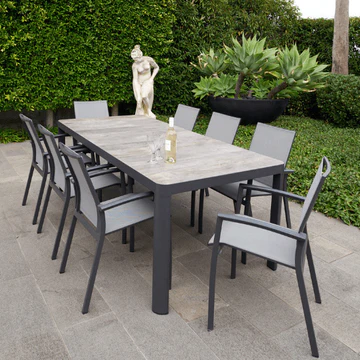
What types of cushions and fabrics are ideal for garden furniture?
When choosing cushions and fabrics for your garden furniture, it’s important to consider durability, weather resistance, comfort, and ease of maintenance. Here are some types of cushions and fabrics that are ideal for garden furniture:
1. Outdoor-Specific Fabrics:
Look for fabrics specifically designed for outdoor use. These fabrics are typically made from synthetic materials that are resistant to fading, mold, mildew, and moisture. They are often treated to be UV-resistant, which helps prevent color fading due to sun exposure. Examples of outdoor-specific fabrics include solution-dyed acrylic, polyester, or vinyl-coated fabrics.
2. Sunbrella:
Sunbrella is a well-known brand of outdoor fabric that is highly durable and fade-resistant. It is made from solution-dyed acrylic fibers, which are known for their resistance to UV rays, moisture, and stains. Sunbrella fabrics come in a wide range of colors and patterns, allowing you to find options that suit your style.
3. Olefin:
Olefin is another popular synthetic fabric for outdoor use. It is resistant to water, stains, and fading. Olefin fabric is often used for cushions and upholstery due to its durability and affordability. It is available in a variety of colors and patterns.
4. Quick-Drying Foam:
When it comes to cushion fillings, quick-drying foam is an excellent choice for garden furniture. This type of foam has an open-cell structure that allows water to drain quickly, preventing the buildup of moisture. Quick-drying foam helps keep your cushions dry and prevents the growth of mold or mildew.
5. Water-Resistant Cushion Covers:
Ensure that your cushion covers are water-resistant to protect the foam filling from getting wet. Look for covers made from fabrics that repel water and are easy to clean. Water-resistant cushion covers help maintain the integrity of the cushions and make them more resistant to the outdoor elements.
6. Removable and Washable Covers:
Opt for cushions with removable and washable covers. This allows you to easily clean the fabric and remove any stains or dirt that may accumulate over time. Removable covers also give you the flexibility to change the look of your garden furniture by swapping out covers or patterns.
7. Mildew-Resistant Materials:
Choose fabrics and cushion fillings that are resistant to mildew. Mildew can thrive in damp environments, so selecting materials that inhibit its growth is important for maintaining a clean and hygienic outdoor seating area.
When selecting cushions and fabrics for your garden furniture, consider the specific climate and weather conditions in your area. Additionally, follow the manufacturer’s instructions for care and maintenance to ensure the longevity of your cushions and fabrics.
editor by CX 2023-12-15
China supplier 2-20% Discount Outdoor Shade Waterproof China Pergola Garden Gazebo Outdoor CHINAMFG Luxury vacuum pump for ac
Product Description
2-20% Discount Outdoor Shade Waterproof China Pergola Garden Gazebo Outdoor CHINAMFG Luxury
2-20% Discount Outdoor Shade Waterproof China Pergola Garden Gazebo Outdoor CHINAMFG Luxury
| Shape: | Rectangular |
|---|---|
| Frame Material: | Aluminum |
| Sail Material: | Aluminum Louvered Roof |
| Samples: |
US$ 3000/Piece
1 Piece(Min.Order) | Order Sample |
|---|
| Customization: |
Available
|
|
|---|
.shipping-cost-tm .tm-status-off{background: none;padding:0;color: #1470cc}
|
Shipping Cost:
Estimated freight per unit. |
about shipping cost and estimated delivery time. |
|---|
| Payment Method: |
|
|---|---|
|
Initial Payment Full Payment |
| Currency: | US$ |
|---|
| Return&refunds: | You can apply for a refund up to 30 days after receipt of the products. |
|---|
Can I leave aluminum garden furniture outside year-round, or should I store it?
While aluminum garden furniture is generally designed to withstand outdoor conditions, it is recommended to take certain precautions to ensure its longevity. Here are some factors to consider when deciding whether to leave your aluminum furniture outside year-round or store it:
1. Climate:
The climate in your area plays a significant role in determining whether you should leave your aluminum furniture outside year-round. In regions with mild climates and minimal extreme weather conditions, such as moderate temperatures and low humidity, it is usually safe to leave the furniture outdoors.
2. Harsh Weather:
If you live in an area with harsh weather conditions, such as extreme heat, heavy rain, snow, or high winds, it is advisable to store your aluminum furniture during these periods. Prolonged exposure to such elements can gradually affect the appearance and durability of the furniture.
3. UV Exposure:
Direct and prolonged exposure to sunlight can cause fading or discoloration of the furniture’s finish over time. If your aluminum furniture is consistently exposed to intense sunlight, it may be beneficial to provide shade or use protective covers to minimize UV damage.
4. Maintenance Effort:
Leaving your aluminum furniture outside year-round may require more maintenance to keep it in good condition. Regular cleaning, applying protective coatings, and addressing any signs of damage or wear become even more important when the furniture is exposed to outdoor elements continuously.
5. Storage Space:
If you have sufficient storage space available, storing your aluminum furniture during periods of non-use or harsh weather can help prolong its lifespan. Storing the furniture in a dry and well-ventilated area, such as a garage, shed, or covered patio, can provide additional protection.
6. Furniture Covers:
If leaving your aluminum furniture outside year-round, consider using furniture covers designed for outdoor use. Quality covers can help protect the furniture from dust, dirt, UV rays, and moisture. Ensure that the covers are properly fitted and secure to prevent wind damage.
7. Manufacturer’s Recommendations:
Refer to the manufacturer’s recommendations or care instructions for your specific aluminum furniture. They may provide guidance on whether the furniture is suitable for year-round outdoor use or if it is advisable to store it during certain conditions.
In conclusion, while aluminum garden furniture is generally durable and weather-resistant, storing it during harsh weather conditions and providing regular maintenance can help prolong its lifespan and keep it in optimal condition. Consider the climate, weather patterns, UV exposure, maintenance effort, storage space availability, and manufacturer’s recommendations to make an informed decision on whether to leave your aluminum furniture outside year-round or store it.
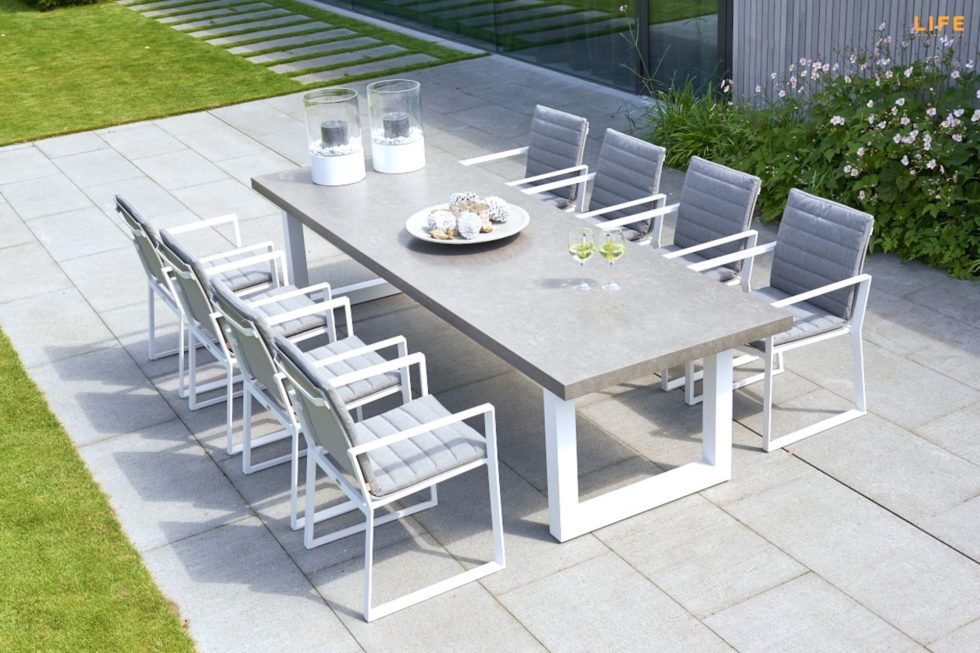
What are the advantages of using powder-coated aluminum for garden furniture frames?
Powder-coated aluminum offers several advantages when used for garden furniture frames. Here are the key benefits:
1. Durability:
Powder coating creates a highly durable finish that can withstand outdoor conditions. The powder coating process involves applying a dry powder to the aluminum surface and then curing it in an oven. This results in a hard and protective layer that resists chipping, scratching, and fading. The durable nature of powder coating ensures that the furniture frames can withstand regular use and exposure to the elements without significant wear or damage.
2. Weather Resistance:
Powder-coated aluminum is highly resistant to weathering. It can withstand exposure to sunlight, rain, humidity, and temperature fluctuations without corroding or deteriorating. The powder coating acts as a barrier that protects the aluminum from moisture, UV rays, and other environmental factors that can cause damage. This makes powder-coated aluminum ideal for outdoor furniture that needs to withstand various weather conditions throughout the year.
3. Color Options:
Powder coating offers a wide range of color options for garden furniture frames. The powder coating process involves using pigmented powders, allowing for customization in terms of color and finish. Whether you prefer vibrant hues or subtle tones, there are numerous color choices available to suit your aesthetic preferences and complement your outdoor decor. Additionally, the color of powder-coated aluminum remains vibrant and fade-resistant over time.
4. Easy Maintenance:
Powder-coated aluminum is relatively low-maintenance compared to other materials. The smooth and non-porous surface of the powder coating makes it easy to clean. Generally, regular cleaning with mild soap and water is sufficient to keep the frames looking their best. The durable finish also helps prevent the accumulation of dirt, stains, and grime, making maintenance tasks easier and less frequent.
5. Eco-Friendly:
Powder coating is an environmentally friendly finishing option. The powder coating process does not involve the use of solvents or emit harmful volatile organic compounds (VOCs) into the air. Additionally, powder coatings are highly efficient, with minimal waste, as any overspray can be collected and reused. This makes powder-coated aluminum a sustainable choice for garden furniture.
Overall, the advantages of using powder-coated aluminum for garden furniture frames include durability, weather resistance, a wide range of color options, easy maintenance, and eco-friendliness. These qualities make powder-coated aluminum an excellent choice for outdoor furniture that can withstand the elements while maintaining its appearance and functionality over time.

How can I maintain and care for my aluminum garden furniture to keep it looking new?
To keep your aluminum garden furniture looking new and well-maintained, here are some tips for maintenance and care:
1. Regular Cleaning:
Regular cleaning is essential to prevent dirt, debris, and stains from accumulating on your aluminum furniture. Use mild soap or a gentle household cleaner mixed with water to clean the surfaces. Avoid abrasive cleaners or tools that can scratch the aluminum. After cleaning, rinse thoroughly with water and dry the furniture completely.
2. Protective Covers:
Consider using protective covers when your aluminum furniture is not in use, especially during long periods of storage or inclement weather. Covers can help shield the furniture from dust, dirt, and UV rays, prolonging its lifespan and maintaining its appearance.
3. Avoid Harsh Elements:
While aluminum is durable and weather-resistant, it’s still a good practice to avoid exposing your furniture to extreme weather conditions whenever possible. Direct exposure to prolonged sunlight, heavy rain, or snow can gradually affect the appearance and finish of the furniture. If you live in an area with harsh weather, consider moving your furniture to a protected area or using umbrellas or shade sails to provide additional protection.
4. Rust Prevention:
Although aluminum is naturally resistant to rust, certain factors can still cause corrosion. To further protect your furniture, apply a thin layer of automotive wax or a specialized metal protector to the surfaces. This protective layer can help guard against oxidation and maintain the shine of the aluminum.
5. Cushion Care:
If your aluminum furniture has cushions, follow the manufacturer’s instructions for cleaning and maintenance. Remove the cushions when not in use or during storage to prevent moisture accumulation. Spot clean any spills or stains promptly to avoid permanent damage.
6. Inspect and Repair:
Regularly inspect your aluminum furniture for any signs of damage or loose parts. Tighten screws or bolts if necessary and address any minor issues promptly to prevent further damage.
7. Seasonal Storage:
If you live in an area with harsh winters or extended periods of non-use, consider storing your aluminum furniture indoors or in a dry and well-ventilated storage area. Clean and dry the furniture thoroughly before storage, and consider using furniture covers or protective wraps to prevent scratches or dings.
By following these maintenance and care tips, you can keep your aluminum garden furniture looking new and extend its lifespan. Regular cleaning, protective covers, avoiding harsh elements, rust prevention, cushion care, inspecting and repairing, and proper seasonal storage will help you maintain the appearance and functionality of your aluminum furniture for years to come.
editor by CX 2023-12-15